AI is transforming brand photoshoots by saving time, cutting costs, and offering unmatched flexibility. Here’s what you need to know:
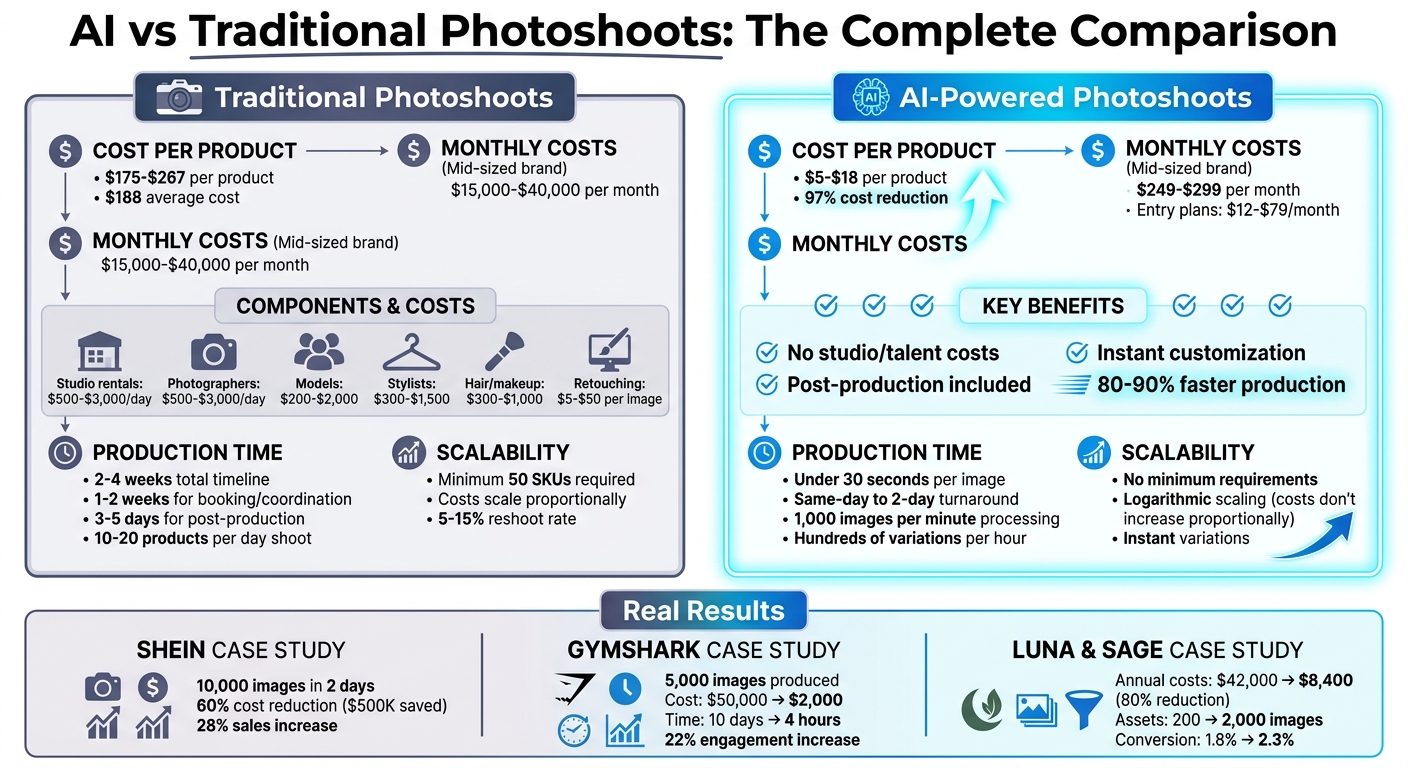
- Cost savings: AI reduces per-product photography costs from $188 to as low as $5, saving brands up to 97%.
- Speed: AI tools like Mock It AI create high-quality visuals in under 30 seconds, compared to the 2–4 weeks needed for traditional shoots.
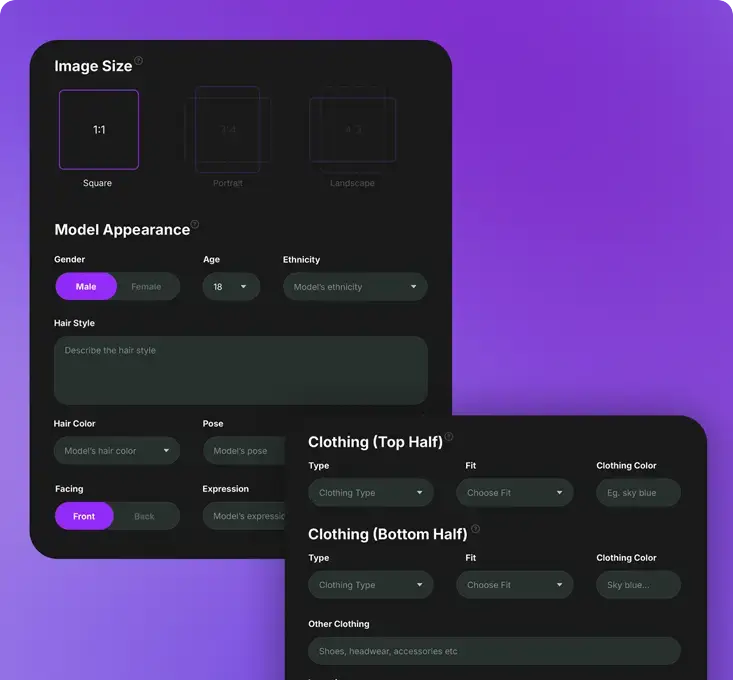
- Customization: Brands can instantly generate diverse images tailored to different audiences by adjusting attributes like age, ethnicity, and body type.
- Scalability: AI handles large volumes without proportional cost increases, enabling faster market responsiveness.
For example, Shein produced 10,000 product images in two days, cutting costs by 60% and boosting sales by 28%. Smaller brands benefit too, with AI plans starting at just $12 per month, making professional-grade visuals accessible to all.
AI isn’t just a shortcut – it’s a game-changer for brands of all sizes. Whether you’re launching a new product or scaling globally, AI-powered photoshoots deliver faster results and higher ROI.
Traditional vs AI-Powered Photoshoots: Cost, Time and Efficiency Comparison
AI Photoshoot for Fashion – No Models, No Studio | A Game Changer for Clothing Marketing
sbb-itb-2c1a147
Common Challenges in Traditional Brand Photoshoots
Traditional photoshoots come with a range of challenges that can slow down processes and strain budgets, making it harder for brands to adapt quickly.
Time and Coordination Issues
Organizing a traditional photoshoot involves juggling multiple moving parts – photographers, models, stylists, makeup artists, and editors. This coordination often leads to delays, with the entire process taking 2–4 weeks from the initial brief to the final images. Just securing models and studio time alone can require 1–2 weeks.
The effort required doesn’t always match the output. A full day of shooting typically results in imagery for only 10–20 looks or products. Then there’s the post-production phase, which adds another 3–5 business days for tasks like retouching, color correction, and background adjustments. If market trends shift or creative direction changes, brands may need to start over with an entirely new shoot, adding further delays and costs.
This lack of flexibility can be a major obstacle, especially when brands are racing to get products online and available for sale.
High Costs and Budget Limitations
Traditional photoshoots come with hefty price tags because of all the components involved. Here’s a breakdown of typical costs:
- Studio rentals: $500–$3,000 per day
- Photographers: $500–$3,000 daily
- Models: $200–$2,000
- Stylists: $300–$1,500
- Hair and makeup artists: $300–$1,000
- Model agency fees: An additional 20%–25%
Post-production adds even more to the budget. Basic retouching costs $5–$25 per image, while advanced edits can reach $15–$50 per image. For a mid-sized brand introducing 200 new products monthly, photography expenses can total $15,000–$40,000 per month. Brands with larger catalogs often spend over $250,000 annually.
Mistakes during shoots also pile on extra costs. Around 5%–15% of products need reshoots due to quality or styling issues, with each reshoot costing $50–$200 per product. And since costs scale with the number of products, doubling your product count means doubling your photography budget.
Difficulty Scaling and Customizing Content
Scaling traditional photoshoots is another significant hurdle. Most shoots require a minimum of 50 SKUs to make setup costs worthwhile, which makes them impractical for testing small product launches. Expanding a catalog of 1,000 SKUs can take months and cost anywhere from $50,000 to $200,000.
Customizing content for different markets adds even more complexity. For instance, brands often need separate shoots with region-specific models to reflect local demographics. Testing creative approaches – like comparing lifestyle shots with plain white backgrounds – requires paying for entirely separate shoots.
Contract restrictions and model availability further complicate scaling efforts. Ensuring a consistent look across product lines becomes nearly impossible. As Nunzio Alexandro Letizia, Co-founder of PiktID, explains:
"The goal was never to replace photographers – it’s to remove the bottleneck between having a product and having the visuals to sell it. Brands shouldn’t have to choose between quality and scale".
These challenges underline the need for solutions that can streamline the process while maintaining quality. AI-powered tools are emerging as a way to address these inefficiencies.
How AI Solves Brand Photoshoot Problems
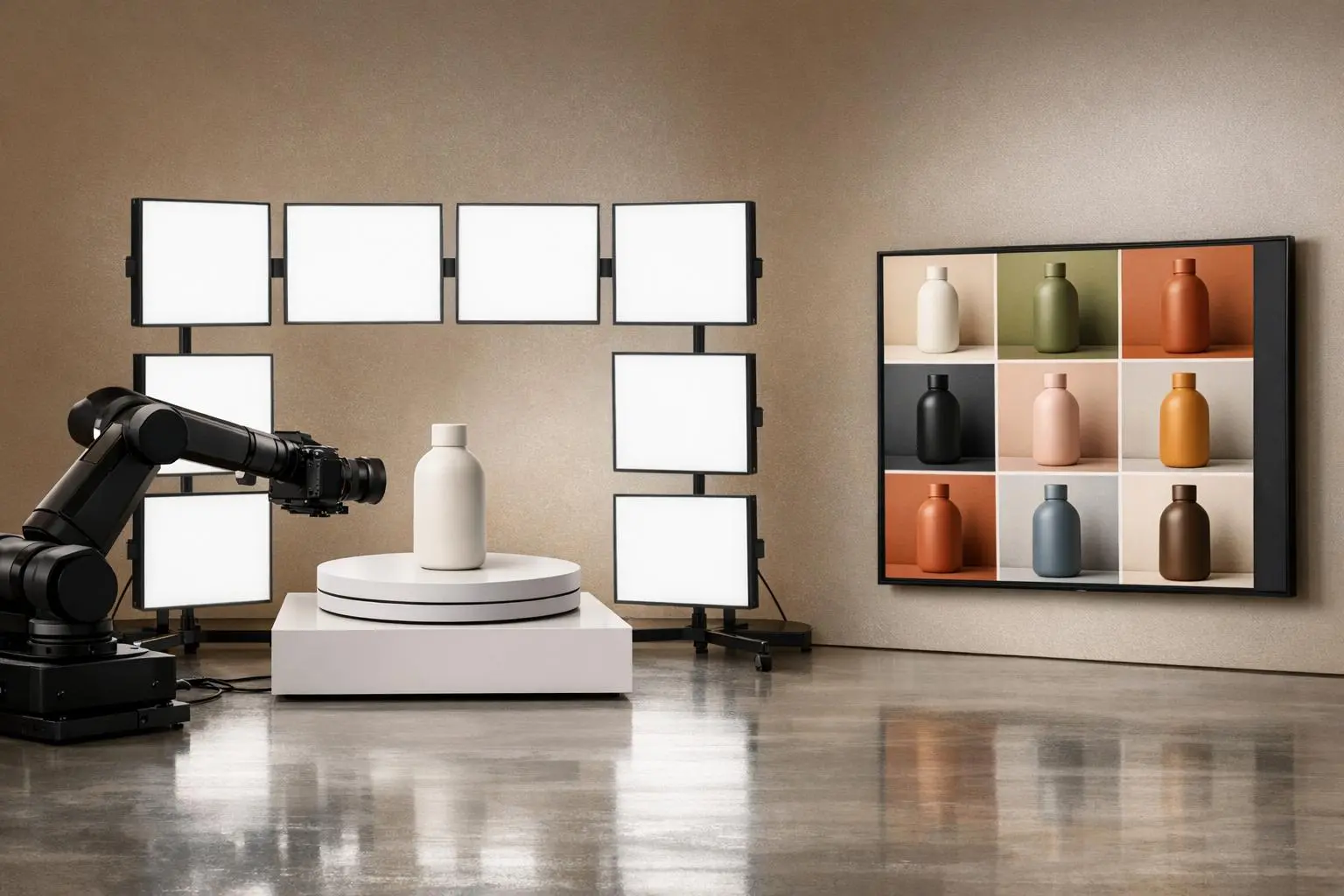
AI-powered tools are transforming the way brands approach photoshoots, addressing challenges like time, cost, and scalability by eliminating the need for physical setups. Take Mock It AI, for example – it allows users to create custom models, design clothing, and craft detailed scenes, generating high-quality mockups in under 30 seconds. Compare that to traditional photoshoots, which can take weeks. These advancements are reshaping content creation, speeding up production, and offering unmatched customization.
Automating Content Creation
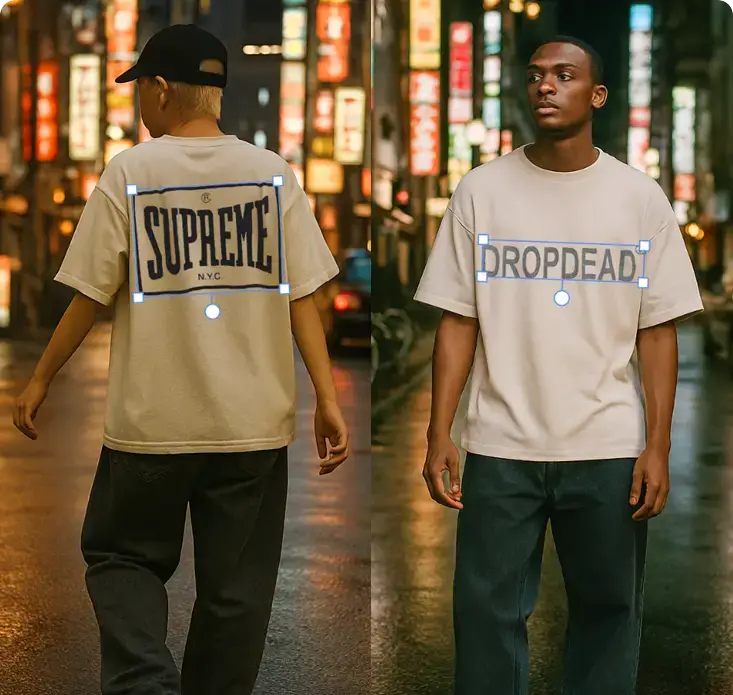
AI simplifies content creation by replacing the need for elaborate physical setups with digital solutions. Mock It AI, for instance, uses 3D mapping and fabric distortion technology to ensure that uploaded designs fit virtual garments as naturally as real fabric would. Users can now control camera settings, lens options, framing, and lighting – all digitally. What used to require expensive equipment and professional expertise can now be done with a few clicks, drastically reducing production time.
Faster Production Times
Speed is one of the biggest advantages of AI-powered photoshoots. Traditional shoots might manage 10–20 looks in a day, but AI tools can generate hundreds of images in just an hour. For instance, in early 2024, Shein used AI to produce over 10,000 product images in just two days, cutting production time from two weeks and slashing costs by 60%. This saved the company approximately $500,000 and boosted sales by 28%. Additionally, brands can experiment with 50 outfit variations in an hour, quickly selecting and publishing the best designs. This approach allows visuals to be created and shared 80–90% faster than traditional methods.
Better Customization Options
AI also opens up new possibilities for customization, enabling brands to create diverse visuals without worrying about model availability or additional expenses. With AI, brands can adjust attributes like gender, age, ethnicity, hairstyle, body type, and pose. This flexibility supports inclusive representation, offering models in a range of sizes (0–24) and various skin tones to reflect specific target audiences. For example, Gymshark used AI in June 2023 to produce 5,000 lifestyle images, cutting costs from $50,000 to just $2,000. Production time dropped from 10 days to just 4 hours, and the campaign launched 35% faster, resulting in a 22% increase in engagement. By eliminating the need for separate photoshoots for different markets, AI makes tailoring content for diverse audiences easier than ever.
Cost and Efficiency Benefits of AI-Powered Photoshoots
AI technology isn’t just about speed and flexibility – it’s also a game-changer when it comes to cutting costs. By using AI-powered photoshoots, brands can slash photography expenses by anywhere from 80% to an incredible 97%, all while producing more content in less time. To put this into perspective, traditional product photography costs between $175 and $267 per product, factoring in studio rentals, talent fees, and post-production work. With AI, those costs drop to as little as $5–$18 per product. For a smaller brand photographing 50 products each month, this could mean reducing costs from $9,400 to just $249 – a savings of over $9,000 every single month.
Measuring Cost Savings
A big part of these savings comes from eliminating major expenses like studio rentals and talent fees, which AI solutions significantly reduce or even remove. Post-production, which typically costs $5 to $50 per image, is also included in most AI platform subscriptions, further reducing costs.
Take Luna & Sage as an example. In early 2025, they managed to cut their annual creative costs from $42,000 to $8,400 – an 80% reduction. At the same time, they expanded their asset library from 200 to 2,000 images, improved their conversion rates from 1.8% to 2.3%, and even reduced return rates by 15%.
"We’d launch a new candle collection and by the time we got the photos back, our competitors had already captured the market moment. We were spending more on photos than on inventory."
- Maya Chen, Co-founder, Luna & Sage
Improved Workflow Efficiency
Traditional photoshoots can take weeks to move from receiving products to delivering final images. AI, on the other hand, speeds up that process to as little as same-day or 2-day turnarounds. This rapid pace allows brands to jump on seasonal trends and market opportunities without delay. Brands using AI workflows report 15% to 25% higher sell-through rates for trend-driven products, thanks to their ability to list items while demand is still peaking.
AI also scales far better than traditional methods. While conventional photoshoots require more time and money as the number of products increases, AI scales logarithmically. This means it can handle large volumes without a proportional rise in costs or time commitments. For example, cloud-based AI can process up to 1,000 images per minute, applying adjustments like color correction and background removal almost instantly. These time savings translate directly into faster market responsiveness and improved ROI.
ROI for Small and Medium-Sized Brands
For smaller brands, the cost savings and efficiency gains of AI are especially impactful. Entry-level AI plans start at just $29 to $79 per month for 50 to 200 images, while professional plans range from $99 to $299 per month for 500 to 2,000 images. Compare that to traditional photography budgets for mid-sized brands, which can range from $15,000 to $40,000 monthly.
Platforms like Mock It AI make these solutions accessible. Their Starter plan offers 100 mockup generations for $12 per month, the Growth plan provides 250 mockups for $29 per month, and the Pro plan delivers 650 mockups for $69 per month. These plans allow brands to create hundreds of variations, experiment with different backgrounds and styles, and tailor content for various markets – all without the escalating costs tied to traditional photoshoots.
One standout example is TechFlow, an electronics accessories brand. They used AI to launch in 12 international markets simultaneously, generating over 200 localized assets from just 15 original shots. This approach saved them $180,000 in localization costs and enabled them to go global all at once. Even better, A/B testing revealed that their localized AI-generated images outperformed generic ones by 34%.
How to Adopt AI in Brand Photoshoots
Evaluating Your Brand’s Requirements
Before diving into AI-powered photoshoots, take a step back and assess what your brand truly needs. Start by looking at your product lineup. AI is fantastic for items like electronics, home décor, and packaged goods, but it can struggle with reflective surfaces or the intricate textures of fabrics. If your business involves photographing 50+ products each month, AI could save you time and significantly cut per-image costs.
Think about how quickly you need to bring products to market. If your current photography process can’t keep up with your product development cycle, AI might be the answer – reducing turnaround times from weeks to mere hours. A good way to test this? Run a pilot program. Choose 10 to 15 key products, generate AI-based variations, and compare them with your professional shots. Interestingly, about 71% of shoppers can’t tell the difference between AI-generated and traditional images. Use these findings to craft an AI strategy that works seamlessly with your existing setup.
Adding AI to Your Creative Workflow
Once you’ve identified your needs, integrating AI doesn’t mean starting from scratch. Begin by capturing one high-quality image of each product under neutral lighting and a simple background. This "foundation image" becomes the base for AI to generate lifestyle shots, alternate settings, and even seasonal variations.
Create a workflow that blends speed with quality. For example, after capturing that single foundation image – at an average cost of $50 per item – AI can produce multiple variations optimized for different platforms. This hybrid approach maintains accuracy while scaling content production. To streamline even further, connect your AI tools directly to platforms like Shopify or your digital asset management system.
For clothing brands, tools like Mock It AI make the process even simpler. You can build a custom model that mirrors your target audience, upload your designs, and specify settings to generate entire photoshoots instantly. With plans starting at $12 per month for up to 100 mockups, this is a cost-effective way to experiment with different styles and backgrounds without the hefty price tag of traditional shoots.
Maintaining Quality and Consistency
Efficiency is great, but not at the expense of your brand’s visual identity. Your photography style is a core part of your brand, so treat it like an asset. Develop a "Photography Style" guide that outlines six key elements: lighting, shadows, color grading, depth of field, composition, and overall mood. Without consistency, you risk spending 1.75 times more on media just to achieve the same results as brands with a unified aesthetic.
To ensure consistency, don’t rely solely on text prompts for AI. Upload 1–5 high-quality reference images that define your brand’s look. This helps lock in your visual identity and minimizes variations. On top of that, have a human review process in place. Check every batch of AI-generated images for artifacts, alignment with your style guide, and overall quality.
This approach has already shown success. In December 2025, photographer Liam Brooks used it for a retail client’s fall collection. By replacing inconsistent human model shots with a single AI-generated "signature model" tailored to the brand’s audience, the campaign saw a 43% boost in Instagram engagement. Similarly, a sustainable fashion startup using the same workflow increased conversion rates by 27% in just 30 days.
Conclusion
Traditional brand photoshoots come with hefty price tags, slow turnaround times, and scalability issues. For a mid-sized brand, monthly photography costs can range from $15,000 to $40,000. By switching to AI, these expenses can drop by up to 97%, slashing per-product costs from approximately $188 to less than $5. Large retailers are already reaping the benefits, saving over $1.8 million annually with AI-driven workflows. And it’s not just about cost – AI dramatically accelerates production timelines.
What once took 2–4 weeks in a traditional setup can now be done in under 30 seconds. Gone are the days of booking studios, coordinating schedules, and waiting weeks for results. AI tools like Mock It AI allow you to create custom models, style clothing, and design any setting you can imagine – all in moments. With plans starting at just $12 per month for 100 credits, even smaller brands can access professional-grade visuals.
The impact on business metrics is equally impressive. Brands leveraging AI report 15–25% higher sell-through rates thanks to faster product listings, while consistent, high-quality imagery boosts page-to-cart conversion rates by 10–15%.
Beyond cost and speed, AI removes creative roadblocks. It bridges the gap between vision and execution, offering flexibility without sacrificing quality. Whether you’re a solo entrepreneur or managing a massive product catalog, tools like Mock It AI provide the resources to compete effectively. As MindStudio puts it, "The shift isn’t coming – it’s already here".
FAQs
Do I need real product photos to use AI for images?
AI can indeed produce lifelike images even without real product photos. It does this by generating models and environments based on descriptions or reference visuals. That said, using actual product photos can enhance precision and help maintain consistency in the final images.
How do I keep AI-generated photos on-brand and consistent?
To keep AI-generated photos aligned with your brand, establish a consistent visual style that mirrors your brand’s aesthetic. This includes elements like lighting, color grading, shadows, and composition. You can upload 1–5 reference images to set this standard and apply it to all your product images. Generative AI tools that can recall models, poses, and settings make it easier to maintain this consistency, ensuring your catalog and sales channels have a unified appearance.
What products are hardest for AI photoshoots to get right?
AI-powered photoshoots often face challenges when dealing with products that demand consistent visuals and precise details – think catalog images showcasing multiple angles of the same item. Even small inconsistencies can make the images look unpolished, which might harm consumer confidence. This underscores how critical it is to maintain accuracy when relying on AI for these types of tasks.