



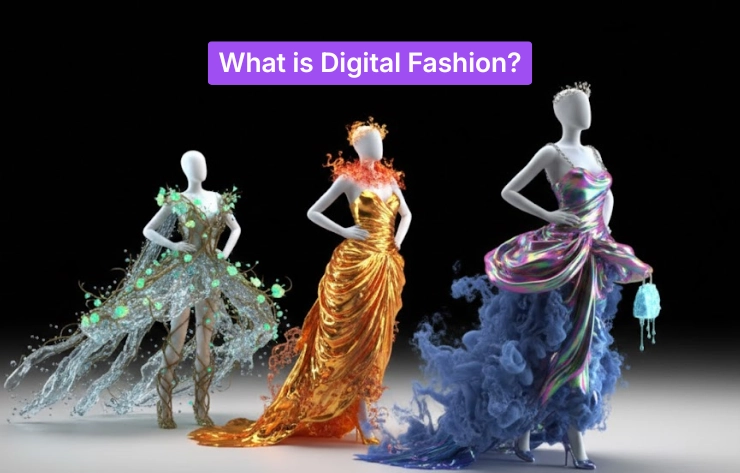
Digital fashion refers to the creation, simulation, and use of clothing that exists primarily in digital form, developed with 3D design tools and experienced across platforms such as e-commerce, gaming worlds, and virtual spaces. It operates through a digital-first workflow that includes creation and design, 3D garment modeling, fabric simulation, avatar fitting, and virtual try-on using augmented reality, before garments are deployed for use in online stores, games, or NFTs.
By replacing physical sampling, digital fashion shortens design cycles and improves visualization accuracy, thereby reducing material waste and production costs. These efficiency gains also unlock greater creative flexibility, allowing designers to move beyond physical constraints. As a result, digital fashion takes multiple forms, including wearable digital garments, digital collectibles and NFTs, phygital fashion, and digital fashion content, all of which are applied across gaming avatars, social media campaigns, and design prototyping.
How Does Digital Fashion Work?
Digital fashion works through a structured digital workflow that combines creation and design, 3D fitting, augmented reality, and digital ownership to produce clothing that exists, functions, and is distributed entirely in virtual environments. This approach replaces physical sampling with digital processes, enabling faster iteration, realistic visualization, and multi-platform deployment of fashion assets.
Step-by-step process of how digital fashion works:
Step 1: Creation & Design
The process starts with a design concept that defines the garment’s style, silhouette, and purpose within a digital environment. Designers create digital sketches, visual references, or concept boards and convert them into a structured virtual design plan that guides modeling and simulation. At this stage, the garment is planned for multiple use cases, such as virtual try-on experiences, gaming avatars, or digital collectibles, ensuring the design supports reuse across platforms and applications.
Step 2: 3D Garment Modeling
Designers construct the garment using 3D fashion design software such as CLO Virtual Fashion or Browzwear, where flat patterns are digitally drafted and stitched together to form a complete 3D garment model. This process follows traditional pattern-making logic but operates entirely in a virtual environment, allowing designers to adjust structure, sizing, and details quickly without producing physical samples or material waste.
Step 3: Fabric Simulation and Material Behavior
The system then applies fabric simulation to the 3D garment, assigning physical attributes such as weight, flexibility, and texture. The system calculates how the digital fabric bends, folds, and moves during motion, creating a visually accurate representation of real-life clothing performance. This step directly supports 3D fitting by determining how the garment behaves when worn by digital models or avatars.
Step 4: Fitting on Avatars and Virtual Models
The digital garment is fitted to a 3D avatar representing specific body shapes or consumer profiles, allowing designers to evaluate fit and proportion in a controlled virtual setting. Designers adjust seams, measurements, and garment proportions directly on the model to assess size accuracy and movement behavior. It supports real-life sizing decisions while also enabling adaptation for avatars used in gaming and digital platforms.
Step 5: Virtual Try-On (AR) and Visualization
Once fitting is finalized, the garment can be deployed in virtual try-on (AR) systems. These systems allow consumers to visualize digital clothing on themselves using mobile cameras or smart devices. The same garment is also rendered into high-quality images or animations for product pages, marketing campaigns, and digital showcases, ensuring consistent visual representation across channels.
Step 6: Platform Use, NFTs & Ownership
After finalization, the digital garment is exported for specific applications. It may be:
- Used in avatars and gaming platforms as wearable items
- Issued as NFTs with ownership records for collectors
- Integrated into e-commerce tools for AR-based shopping
In the case of NFTs, the garment becomes a digitally owned fashion asset, with blockchain technology recording authenticity and ownership.
What Are the Benefits of Digital Fashion?
The benefits of digital fashion include reduced fabric waste, lower production and shipping costs, faster design and revision cycles, and expanded creative freedom enabled by virtual design and simulation. By shifting garment development from physical samples to digital workflows, fashion brands improve efficiency, limit environmental impact, and create designs that can function across real-life production, virtual try-on experiences, and digital-only platforms.
5 major benefits of digital fashion:
- Eliminates fabric waste
In traditional design, multiple physical prototypes (samples) are created, refined, and often discarded before a final design is approved, which increases the total cost. On the other hand, digital fashion enables designers to refine fit, drape, and silhouette in a virtual environment. According to research published in MDPI Sustainability, transitioning to digital prototyping can reduce textile waste by up to 35% to 40% during the design phase. This zero-waste fashion prototyping ensures that fabric is cut only when a design is 100% finalized for production, preventing the trash-to-trend cycle.
- Reduces production and shipping costs
Physical sampling requires sourcing materials, manufacturing labor, and international shipping, all of which increase production costs early in the design cycle. Digital fashion minimizes these costs by enabling brands to review designs, test variations, and approve collections virtually before committing to manufacturing. This approach reduces the number of physical samples required, lowers transportation expenses, and limits costly last-minute changes. As a result, brands gain better cost predictability and reduced financial exposure during product development.
- Enables faster design and revisions
When design decisions are made digitally, revisions are no longer constrained by the time required to produce and ship physical samples. Designers adjust patterns, materials, and sizing instantly within 3D environments and validate changes in real time. This continuous feedback loop compresses design timelines, accelerates approvals across teams, and allows brands to respond more effectively to seasonal trends and shifting consumer demand.
- Allows unlimited creativity
Digital garments are not bound by the laws of physics, meaning designers can experiment with materials that would be impossible to wear in real life, such as liquid gold, glowing neon fibers, or floating holographic fabrics. Additionally, designers can experiment with complex structures, animated surfaces, and nontraditional silhouettes that would be difficult to manufacture in the real world. This freedom supports innovation across virtual clothing, digital runways, and immersive fashion experiences.
- Supports eco-friendly practices
The combined reduction in physical sampling, material use, and transportation results in a measurable decrease in environmental impact. Digital workflows lower carbon emissions associated with logistics while encouraging more efficient resource planning throughout the design process. Over time, these efficiencies support responsible production models that align sustainability goals with scalable business operations, allowing fashion brands to reduce their environmental footprint without compromising design quality or speed.
Why Does Digital Fashion Matter?
Digital fashion matters because it offers a sustainable, innovative alternative to traditional clothing, significantly reducing waste and carbon emissions by minimizing physical production, shipping, and excess inventory. Research firms such as Mordor Intelligence report that virtual fit modules can reduce product return rates by 17% to 30% while increasing purchase probability by nearly 27% in e-commerce environments.
This shift allows brands to validate consumer demand through virtual showcases before committing to manufacturing, reducing overproduction and preventing large volumes of unsold inventory from entering landfills. By decoupling demand testing from physical production, digital fashion directly challenges the overproduction model that drives waste across the global fashion supply chain.
Beyond logistics and cost efficiency, digital fashion acts as a catalyst for a new phase of creative and economic transformation within the industry. By removing constraints such as gravity, material cost, and manufacturing feasibility, designers gain the freedom to create avant-garde garments, including liquid-metal forms or animated textures, that exist entirely in digital formats.
Estimates from digital fashion platforms like DressX suggest that purely digital garments generate up to 97% fewer carbon emissions compared to physical clothing. Real-world initiatives such as Nike Move to Zero and Gap’s AI-driven roadmap developed with Google Cloud demonstrate that digital fashion is no longer experimental. It has become a strategic tool for sustainability, creative expansion, and long-term competitiveness in the fashion industry.
What Are the Different Types of Digital Fashion?
The different types of digital fashion include wearable digital garments, digital collectibles and NFTs, phygital fashion, and digital fashion content, each representing a distinct way clothing is designed, experienced, and distributed. These categories explain how fashion functions beyond physical production, covering use cases ranging from virtual try-on and gaming to digital ownership and marketing visualization.
4 types of digital fashion:
- Wearable digital garments: Designed for interaction rather than physical production, these virtual clothing items are worn by people or avatars across digital environments. They are commonly used in virtual try-on experiences, social media visuals, gaming platforms, and metaverse spaces. While they do not exist as physical products, they are built with realistic fit, drape, and movement to closely replicate how clothing behaves in real life.
- Digital collectibles/NFTs: Digital collectibles are fashion items created as limited or unique tradable digital assets, often issued as NFTs to establish ownership and authenticity. These garments function as owned digital items that can be displayed, traded, or worn in supported platforms. Their value comes from scarcity, design exclusivity, and verified digital ownership rather than physical utility.
- Phygital fashion: By linking physical garments with their digital counterparts, this model bridges real-world fashion and virtual identity. Consumers receive a digital version of a purchased item that can be used in online environments, gaming platforms, or social experiences. This approach extends the lifespan and relevance of clothing beyond physical wear while strengthening brand engagement.
- Digital fashion content: Digital fashion content refers to visual assets such as rendered images, animations, and virtual runway presentations created with digital garments. Brands use this content for marketing campaigns, e-commerce product displays, and social media storytelling. It enables high-quality visual production without physical photoshoots, reducing costs and production time.
What Are the Applications of Digital Fashion?
The applications of digital fashion include virtual clothing for gaming avatars, social media photoshoots, fashion design prototyping, AR-based e-commerce try-ons, NFTs, and digital collectibles. These use cases allow brands and designers to test ideas, engage consumers, and distribute fashion digitally, reducing reliance on physical production while expanding creative and commercial reach across platforms.
Key applications of digital fashion:
- Virtual clothing for gaming avatars and metaverse platforms
In gaming and metaverse environments, digital clothing is used to dress avatars with customizable outfits and accessories. These garments help users express identity, status, or affiliation through gaming avatars in virtual worlds. Game publishers and platforms also use digital fashion as a revenue stream by offering limited-edition or branded outfits that enhance personalization and immersion.
- Social media content and virtual photoshoots
Digital fashion enables brands and creators to produce high-quality visuals without organizing physical photoshoots. Garments are rendered onto models or digital bodies and placed into virtual settings for campaigns, editorials, and social media posts. This approach reduces production time and cost while allowing complete control over lighting, styling, and environment.
- Fashion design prototyping and sampling
Within the design process, digital fashion is widely used for prototyping and sampling. Designers test patterns, materials, and fits using 3D garments before any fabric is cut. This application improves design accuracy, reduces development timelines, and supports collaboration between design, merchandising, and production teams.
- E-commerce try-on experiences using AR
Augmented reality allows shoppers to visualize clothing on their own bodies through mobile devices or webcams. Digital garments are overlaid in real time, helping consumers assess fit, style, and appearance before purchase. These try-on experiences improve buyer confidence and help reduce product return rates in online retail.
- NFTs and digital collectibles
Some digital fashion items are issued as collectibles that users can own, trade, or display digitally. These garments are often limited editions and are linked to verified ownership records. Brands use this application to introduce exclusivity, build digital communities, and experiment with new revenue models that do not depend on physical inventory.
- Virtual runways and fashion shows
Fashion houses use digital garments to host virtual runway shows and presentations accessible globally without the environmental cost of traditional fashion weeks. These events showcase collections through animated models or immersive environments rather than physical venues. Virtual shows reduce event costs, expand audience reach, and enable creative formats not possible in traditional runway settings.
What Technologies Are Used in Digital Fashion?
Digital fashion uses many advanced technologies, including 3D design software such as CLO and Browzwear, augmented reality (AR), and blockchain to convert flat patterns into 3D garments, apply fabric physics, and simulate fit on virtual models. By enabling real-time adjustments to structure, materials, and sizing, this software eliminates the need for repeated physical sampling, improves prototyping accuracy, and accelerates design approvals while reducing material waste.
Major technologies used in digital fashion:
- 3D design software (CLO, Browzwear)
Programs such as CLO Virtual Fashion and Browzwear are used to create, fit, and refine digital garments before physical production. These tools convert flat patterns into 3D garments, apply fabric physics, and simulate fit on virtual models. By enabling real-time adjustments to structure, materials, and sizing, this software eliminates the need for repeated physical sampling, improves prototyping accuracy, and accelerates design approvals while reducing material waste.
- Game engines (Unreal, Unity)
Platforms such as Unreal Engine and Unity are used to render, animate, and display digital fashion in interactive environments. These game engines dynamically process digital garments, enabling them to react to movement, lighting changes, and user input. As a result, digital fashion seamlessly integrates into gaming environments, metaverse spaces, and virtual showrooms, enhancing realism, immersion, and user engagement.
- Blockchain for NFTs
Digital fashion relies on blockchain technology to convert virtual garments into verifiable assets with traceable ownership and economic value. When garments are issued as NFTs, blockchain records store authenticity, ownership history, and scarcity on decentralized ledgers that cannot be altered or duplicated. This system allows digital fashion items to be securely collected, traded, or resold, enabling revenue models based on digital ownership rather than physical inventory while protecting creators and buyers from counterfeiting.
- AR/VR platforms
AR and VR platforms play a critical role in bridging digital fashion with real-world consumer interaction by turning virtual garments into experiential shopping tools. Augmented reality enables virtual try-ons (VTO) through smart mirrors and smartphone apps, allowing customers to visualize clothing on their bodies in real time before purchasing. Virtual reality, on the other hand, places digital garments inside immersive environments such as virtual stores, showrooms, or fashion events. Together, these technologies increase purchase confidence, reduce return rates, and connect digital garments directly to e-commerce and in-store retail experiences.
How Can You Create Digital Fashion?
Creating your digital fashion involves a series of structured steps, including understanding garment design basics, using the right 3D software, designing garments, applying digital fabrics, and rendering the final asset. Each step builds on the previous one, allowing creators to move from concept to a fully functional digital garment that can be used for virtual try-on experiences, gaming avatars, marketing visuals, or digital collectibles.
6 simple steps to create your digital fashion:
Step 1: Learn the Basics of 3D Fashion Design
Start by understanding garment construction, digital pattern-making, and fabric behavior. Knowledge of traditional fashion design helps, but creators can also begin directly with digital-first tools focused on virtual garments.
Step 2: Design the Garment in 3D Software
Use 3D design software such as CLO Virtual Fashion or Browzwear to create patterns, stitch panels, and build a complete digital garment. These tools allow real-time adjustments to shape, size, and structure without physical samples.
Step 3: Apply Fabric Simulation and Materials
Assign digital fabrics with properties like weight, stretch, and texture to simulate realistic movement and drape. This step ensures the garment behaves accurately when worn by digital models or avatars.
Step 4: Fit the Garment on a 3D Avatar
Test and refine the garment using a 3D avatar that represents body measurements or character proportions. Adjust seams and sizing until the fit looks correct from all angles and during motion.
Step 5: Render or Export for Platforms
Render the garment for images, animations, or marketing visuals, or export it for real-time platforms. Tools like Unreal Engine and Unity are commonly used for gaming, the metaverse, and interactive environments.
Step 6: Publish or Distribute the Digital Asset
Once finalized, the digital garment can be used for virtual try-on experiences, social media content, gaming avatars, or issued as a digital collectible. The same asset may also support physical production if needed.
What Is the Future of Digital Fashion?
The future of digital fashion includes virtual fitting rooms, digital IDs, gaming outfits, eco-friendly design workflows, and generative AI–driven creation, reflecting a shift in how fashion is designed, experienced, and distributed. As these technologies converge, fashion moves beyond physical products toward a connected digital ecosystem that improves sustainability, enables new forms of creativity, and supports long-term industry transformation rather than short-term experimentation.
Key aspects of the future of digital fashion include:
- Virtual Fitting Rooms
Virtual fitting rooms are expected to be a major part of the digital fashion market, as inaccurate sizing and poor fit remain the leading causes of online fashion returns. Research from Mordor Intelligence shows that virtual try-on solutions can reduce return rates by 17-30% while improving purchase confidence. By allowing shoppers to visualize garments in real time through smart mirrors or smartphone apps, brands reduce overproduction and improve conversion efficiency.
- Digital IDs
Lack of transparency across a garment’s lifecycle has made traceability and resale difficult in the fashion industry. Digital IDs solve this by assigning a persistent identity to each item, storing data on materials, ownership, and resale history through connected systems such as blockchain. According to the World Economic Forum, digital product passports will be essential for enabling circular fashion models, resale ecosystems, and regulatory compliance as sustainability standards tighten globally.
- Gaming Outfits
As virtual worlds evolve into social and commercial spaces, avatar clothing has become a meaningful form of digital expression. Research from McKinsey & Company highlights that virtual goods, including gaming outfits, are among the fastest-growing segments of the digital economy. Fashion brands use these outfits to engage younger audiences, support identity-driven customization, and generate revenue without the constraints of physical production or inventory.
- Eco-Friendly Design
Pressure from regulators, consumers, and supply-chain costs has made sustainability a structural requirement for the fashion industry. Digital fashion supports eco-friendly design by reducing the need for physical sampling, long-distance transportation, and unsold inventory. According to an analysis by the Ellen MacArthur Foundation, over 70% of a garment’s environmental impact is determined at the design stage, making digital-first design workflows critical for reducing waste and enabling circular production models. By validating designs virtually before manufacturing, brands reduce material overuse and align sustainability efforts with scalable production.
- Generative AI Design
Rapid shifts in consumer preferences have heightened the need for faster, more adaptive design processes. An ai fashion design generator can support this process by helping creators generate fashion visuals faster from simple prompts, reducing manual iteration and development time. Insights from Accenture suggest that generative AI will enable large-scale personalization and significantly shorten design cycles, making digital fashion more responsive and scalable.
