




Virtual fashion shows are reshaping how brands present collections while addressing waste in the fashion industry. By replacing physical runway shows with digital tools like 3D rendering, AI, and virtual models, brands are cutting material waste, lowering emissions, and avoiding overproduction. Here’s how:
- No physical samples: Digital prototypes reduce sample production by 60–80%, saving costs and materials.
- Less textile waste: Virtual tools eliminate fabric offcuts and allow precise adjustments without physical resources.
- Lower emissions: Eliminating travel and shipping for shows significantly cuts carbon footprints.
- Reduced overproduction: Brands can gauge demand digitally before manufacturing, avoiding unsold stock.
- AI-powered efficiency: Advanced tools catch design flaws early, reducing wasted materials and defective production.
Virtual shows are streamlining processes while minimizing waste, offering a cleaner and more efficient approach to fashion.
Inside Gary James McQueen’s first digital fashion show | Spotlight | Unreal Engine
sbb-itb-2c1a147
1. No Physical Sample Production Needed
Fashion shows, as we know them, have traditionally relied on creating physical samples for every garment showcased on the runway. This process is anything but cheap; brands often go through 3 to 5 sample rounds per style, with each round costing anywhere from $450 to $5,000 in materials, labor, and shipping. For a mid-sized brand, these sampling expenses can easily surpass $500,000 per season. But digital methods are changing the game.
With virtual fashion shows, designers can skip the wasteful cycle of creating garments solely for display. Instead, they use technologies like augmented and virtual reality to craft digital presentations and virtual prototypes.
This shift to digital sampling is a game-changer. It can reduce the need for physical samples by 60–80% and cut development costs by as much as 30%. Take Bonprix, for example. Under the leadership of Torben Böhm, Manager of Technical Product Development & Digital Innovation, the company reduced sample production by 50% to 100% depending on the product group.
"The reduction of samples varies from 50 to 100%, depending on the product group. In some cases, especially with less complex product groups, production can confidently move forward without requiring any physical samples." – Torben Böhm, Manager of Technical Product Development & Digital Innovation, Bonprix
Other brands are also seeing impressive results. Swiss sportswear company Odlo used 3D design tools to cut their initial investment and sample costs by 70%. Similarly, Oasis replaced their first prototypes with digital samples, saving 25% in materials and shaving over a month off their development timeline. This change led to cost savings of more than 20%.
The message is clear: digital design isn’t just about innovation – it’s about efficiency and sustainability.
2. Less Textile and Material Waste
Virtual fashion shows and digital tools are transforming how the fashion industry approaches waste, especially when it comes to textiles and materials. By doing away with fabric cutting, sewing prototypes, and constant adjustments, these innovations help eliminate offcuts and discarded materials.
Tools like CLO 3D and Browzwear allow designers to simulate fabric behavior and perfect garment details entirely in the digital space. Need to tweak a sleeve? Adjust a collar? Refine a seam? These tools make it possible to do so without ever touching physical materials. The impact is significant: virtual prototyping can reduce pre-production waste by as much as 50–80%.
Real-world examples highlight this shift. Carlings, for instance, launched a digital collection that left no physical footprint. Similarly, Mango‘s "Mango Teen" campaign relied on AI-generated imagery, bypassing the need for traditional, resource-heavy photoshoots.
Digital formats also address waste from overproduction. Instead of creating single-use runway pieces, brands can focus on on-demand manufacturing, producing garments only after they’re finalized or sold. On top of that, advanced virtual photography and fit simulations help reduce product returns by 15–25%, cutting down on waste from unsellable or discarded items.
3. Lower Shipping and Transportation Emissions
Virtual fashion shows tackle one of the biggest contributors to carbon emissions in the fashion industry: the transportation of physical collections and event equipment. Traditional fashion weeks involve shipping entire collections, heavy equipment, and elaborate set designs to major fashion hubs like New York, Paris, and Milan. Air freight, often chosen for its speed, generates a staggering 42 times more carbon emissions per tonne-kilometer than sea freight – and in some cases, up to 60 times more. By sending digital assets instantly over the Internet, virtual shows completely sidestep these carbon-heavy logistics.
Beyond shipping, virtual fashion shows also slash emissions tied to travel. Designers, models, and industry professionals no longer need to fly across the globe for fashion weeks, significantly cutting down on travel-related carbon outputs. This digital shift allows both people and products to stay put, directly reducing a major source of the industry’s greenhouse gas emissions.
4. Less Overproduction and Unsold Stock
Virtual fashion shows are flipping the script on how clothes are made and sold. Instead of producing massive quantities of garments based on predictions, brands now have the chance to gauge consumer interest digitally before making anything. This shift from a "push" model (producing first, hoping it sells) to a "pull" model (producing based on demand) directly addresses a major issue in fashion: approximately 20% of the 150 billion garments made globally each year remain unsold and eventually become waste.
With digital prototypes, brands can present entire collections without cutting a single piece of fabric. Shoppers can explore designs, pre-order their favorites, and even provide feedback in real time. This approach ensures that only styles with proven demand are produced. On top of that, digital tools help refine customer preferences before they buy, further reducing waste.
Virtual try-on technology takes things a step further by lowering return rates. When shoppers can see how a garment will fit and move on their body before buying, they’re less likely to order multiple sizes or return items. In fact, virtual try-ons have been shown to reduce product returns by 27%. Fewer returns mean fewer unsold items, cutting down on waste even more.
5. AI Tools Catch Design Flaws Early
AI-powered design tools are changing the way brands identify potential issues, helping them avoid wasting resources on physical samples. Instead of cutting fabric to test for fit and construction problems, designers now rely on 3D garment visualization to spot flaws in a digital space. These tools use physics-based algorithms to simulate how fabrics behave, accounting for factors like tensile strength, shear, and bending.
By adopting 3D technology, brands have significantly reduced the number of sample rounds – going from 3–5 per style to just 1–2. This shift saves between $450 and $5,000 per sample. In November 2024, Mary Isabel Buenaventura, founder of Refashion, teamed up with Theodora AI to create "Octavia", an AI-driven fashion intelligence system. This partnership has already achieved impressive results: a 60% reduction in fabric waste and a 40% cut in excess inventory. By 2027, the system is expected to prevent 12,000 tons of waste from ending up in the Atacama Desert each year.
AI doesn’t just stop at identifying design flaws – it also improves production efficiency. Automated technical documentation minimizes specification errors, reducing defective production runs. Platforms like fashionINSTA have empowered over 1,200 fashion professionals to achieve 95% first-sample accuracy. This translates to a 15% reduction in fabric waste and a 70% decrease in pattern development time.
"The benefit of digital fashion design is not unlimited creative output. It is faster decision-making before teams spend money on sampling, sourcing, production, and launch." – Nitin Kumar
Digital workflows now allow for same-day validation cycles, a massive improvement over the traditional 4–8 week timeline. This speed lets designers experiment with bold silhouettes and unconventional fabrics without the risk of wasting physical materials, reducing costly rework and scrapped inventory in the process.
Comparison Table
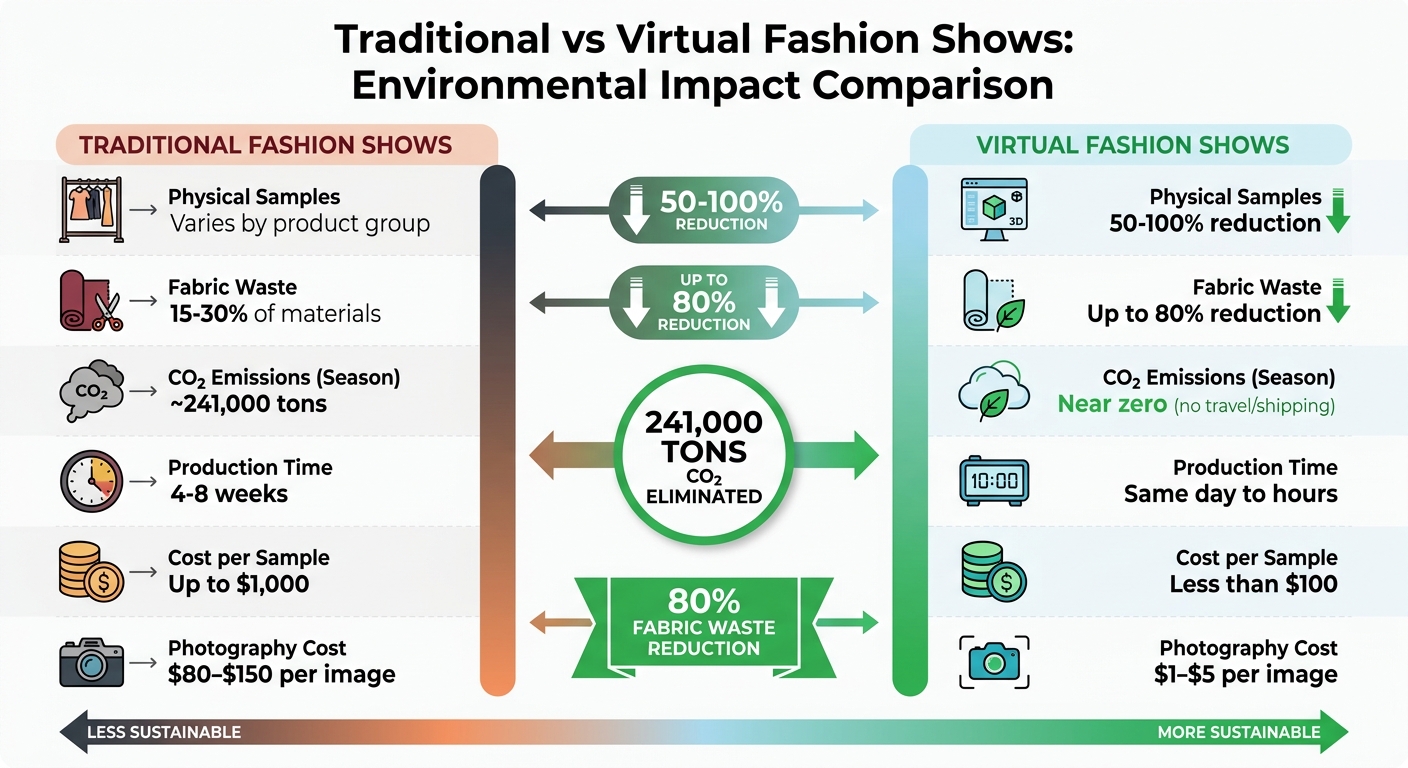
Traditional vs Virtual Fashion Shows: Waste Reduction Comparison
Traditional fashion shows rely heavily on physical prototypes, while virtual shows significantly cut down or even eliminate the need for them. Here’s a comparison of key metrics that highlight the environmental and operational differences between the two.
Transportation emissions stand out the most. The entire fashion show season produces roughly 241,000 tons of CO2 just from travel and transport. Virtual shows nearly eliminate these emissions by removing the need for international flights, hotel stays, and air freight. Considering that air freight generates 42 times more carbon emissions than ocean freight, switching to digital assets offers a massive environmental advantage.
| Metric | Traditional Fashion Show | Virtual Fashion Show |
|---|---|---|
| Physical Samples | Varies by product group | 50%–100% reduction |
| Fabric Waste | 15%–30% of materials | Up to 80% reduction |
| CO2 Emissions (Season) | ~241,000 tons | Near zero (no travel/shipping) |
| Production Time | 4–8 weeks | Same day to hours |
| Cost per Sample | Up to $1,000 | Less than $100 |
| Photography Cost | $80–$150 per image | $1–$5 per image |
Virtual workflows are also dramatically faster. Traditional fashion production takes 4 to 8 weeks to move from concept to completion, while virtual processes can achieve the same results in just hours or a single day. And this efficiency doesn’t compromise quality – brands like Oasis have used Browzwear’s 3D software to cut over a month off their development timelines, saving them 20% or more in production time.
These differences highlight how virtual fashion shows are reshaping the industry, offering an eco-friendly and efficient alternative that aligns with modern sustainability goals.
Conclusion
Virtual fashion shows represent a major step forward in reducing waste in the fashion industry by embracing digital design techniques. These methods can cut fabric waste by up to 80% and shorten production timelines by as much as 70%.
Tools like Mock It AI make this shift even easier for brands by producing fully tailored AI-powered mockups. With this technology, brands can skip physical samples, visualize entire collections, experiment with styling options, and create show-ready assets in just hours instead of weeks.
"Virtual fashion shows are paving the way for a more sustainable and eco-friendly future in the fashion world." – Nathanael Koranteng, Contributor, WARDO TENGO
FAQs
What tools do brands need to run a virtual fashion show?
To thrive in today’s fashion world, brands are turning to advanced digital tools for design, modeling, and presentation. These tools are reshaping how clothing is created and showcased.
- 3D Design Software: This allows designers to create and fit garments digitally, eliminating the need for physical prototypes during the early stages of development.
- Virtual Prototyping: With this, brands can produce realistic clothing models that look and move like the real thing, offering a clear vision of the final product.
- Digital Mockup Platforms: These platforms help create high-quality, lifelike mockups, perfect for showcasing designs without producing physical samples.
By adopting these technologies, brands can cut down on waste, reduce reliance on physical samples, and streamline their workflows. They also make virtual fashion shows more efficient and environmentally friendly.
Can virtual fashion shows still show real fit and fabric movement?
Virtual fashion shows can now offer a realistic view of how garments fit and move, thanks to advanced 3D design technologies. These tools can precisely replicate fabric details and simulate how materials behave on the body, creating a lifelike experience. Plus, they come with an added bonus: they significantly cut down on the environmental footprint compared to traditional runway shows.
How do virtual shows help brands avoid making unsold inventory?
Virtual shows give brands the chance to embrace digital tools like prototyping and virtual try-ons. These tools cut down the reliance on physical samples, which helps curb overproduction. By shifting design and testing into the digital realm, brands can focus on producing only what’s necessary, reducing excess inventory and waste. This approach promotes a more efficient and mindful way to create fashion.
