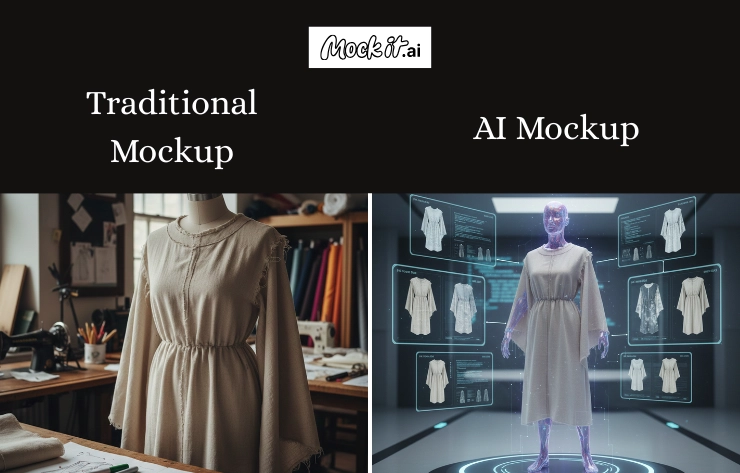
Traditional mockups are physical prototypes made from fabric or cardboard to represent the design of a clothing product, while AI mockups are digitally generated models that use artificial intelligence to quickly create design iterations at significantly cheaper costs. While traditional mockups are commonly used for client presentations and focus group testing, AI mockups are ideal for e-commerce listings, social media content, and rapid prototyping. Both serve as crucial tools in creating and refining fashion designs before production.
In this comparison, we will explore the key differences in cost, quality, and efficiency between traditional and AI mockups. By the end, product designers, marketers, brand agencies, and packaging teams will gain a clear understanding of when and how to use each method effectively. The following sections will cover the specifics of each approach, highlight their advantages and drawbacks, and provide strategic recommendations for combining both methods to maximize your design process.
What Is Traditional Mockup?
A traditional mockup is a full-scale physical prototype created by designers to test fit, design, fabric, and color before production. These mockups are often made from cardboard and cheaper, plain-weave cotton fabrics like muslin or calico, which provide a basic representation of the final product.
While traditional mockups are valuable for assessing the product’s look and feel, they come with high costs. Designing a single clothing item can cost $500 to $2,000, depending on the designer’s expertise. Additional costs include $100 to $300 per hour for photographer fees, and $50 to $200 per hour for models. The production timeline, from conceptualization to final photo edits, typically spans 5 to 10 days for simple designs, but more intricate mockups or collections may take 1 to 2 months. These extended timelines make traditional mockup production processes less flexible for rapid design changes or iterations.
What Is AI Mockup?
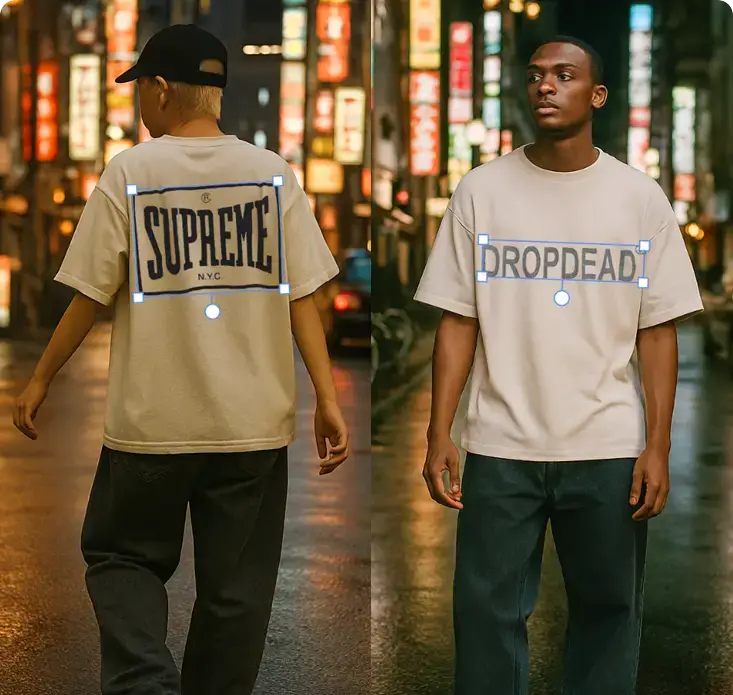
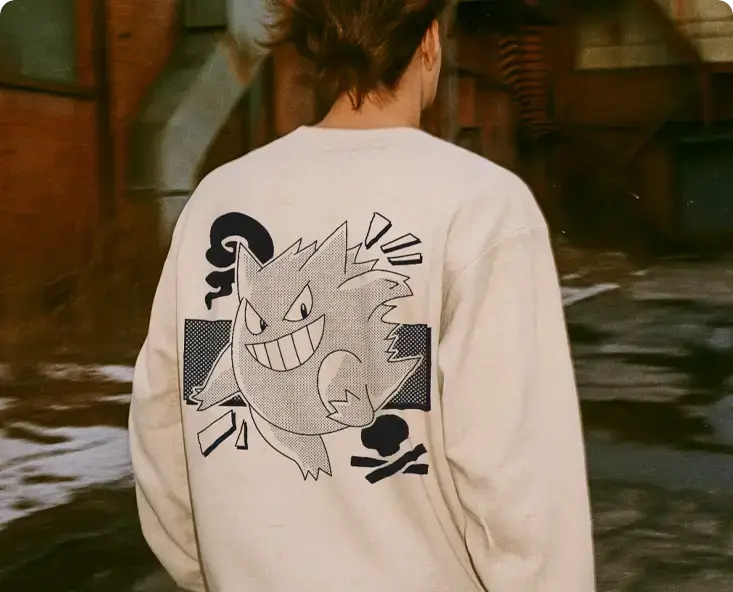
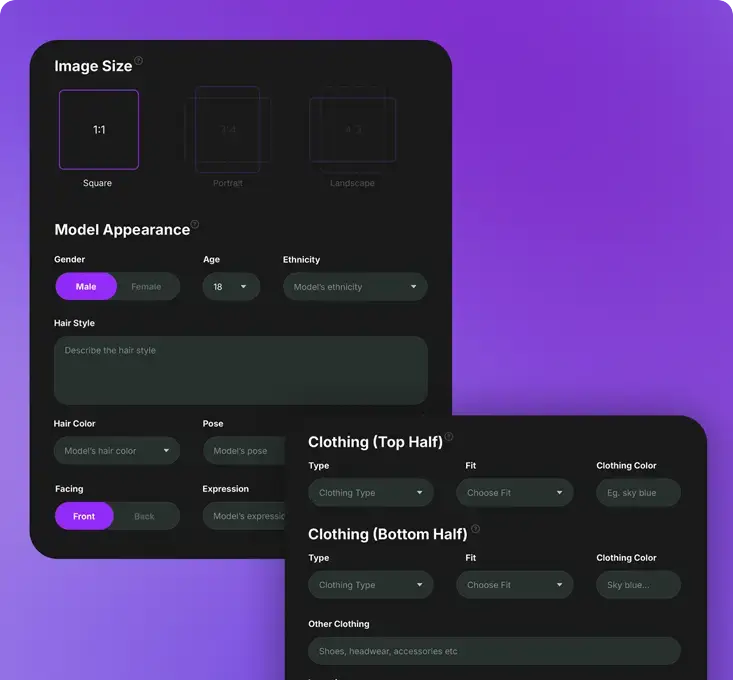
An AI mockup is an AI-generated prototype of clothing designs, where logos and artworks are placed on apparel realistically by wrapping 2D designs through 3D surface wrapping. Some AI tools also generate photorealistic, human-like models to place garments on, providing a highly realistic preview. This method automates design creations, allowing designers to quickly see how their creations would look in real life without the need for manual editing or physical creation. AI mockups eliminate the need for photoshoots and real models, making the process much faster and more efficient by using simple, guided text prompts.
AI mockups are significantly cheaper than traditional ones, ranging from under $0.06 to $1 per image. Subscriptions typically start at $10 for a few dozen credits (1 credit = 1 image in most cases). The time to produce a mockup is also much faster, often taking minutes to hours instead of days or weeks.
How Do Traditional and AI Mockups Compare Across Key Factors?
Traditional mockups offer high physical realism and accuracy, but they come with higher costs and longer production times. AI mockups, on the other hand, are faster, more affordable, and offer greater flexibility for quick iterations and large-scale designs. Their main differences lie in cost, time efficiency, and customization.
Major differences between traditional mockups and AI mockups:
| Key Factors | Traditional Mockup | AI Mockup |
| Cost | $500-$2,000 per item | $0.06-$1 per image |
| Time Efficiency | 5-10 days for simple designs, 2-4 weeks for complex | Minutes to hours |
| Quality | High-quality, accurate physical attributes | High-quality, but may lack tactile accuracy |
| Flexibility and Customization | Limited customization: fixed once created | Unlimited customization: instant revisions |
| Consistency | Varies by production process, may have inconsistencies | Highly consistent across designs |
| Skill Requirement | Skilled designers | Minimal prompting skills |
| Output Variety | Limited to specific designs and revisions | Capable of large quantities and rapid iteration |
| Physical Realism | Highly realistic and tangible due to physical nature | Lacks physical realism but photorealistic, simulated visuals |
- Cost: Traditional mockups are expensive, ranging from hundreds to thousands of dollars per item, while AI mockups typically cost under $1 per image.
- Time Efficiency: Traditional mockups require a longer time, spanning days to weeks, while AI mockups can be produced in minutes.
- Quality: Traditional mockups excel in quality, offering accurate physical attributes, whereas AI mockups, while high-quality, may lack tactile realism.
- Flexibility and Customization: Traditional mockups require new prototypes for revisions, whereas AI mockups allow for unlimited design iterations and instant revisions.
- Consistency: Traditional mockups vary in quality depending on the production process, while AI mockups ensure consistent results across designs every time.
- Skill Requirement: Traditional mockups require skilled designers and artisans, whereas AI mockups only need basic skills for prompt engineering.
- Output Variety: Traditional mockups are limited to a specific design, but AI mockups can quickly generate multiple iterations and a wide range of outputs.
- Physical Realism: Traditional mockups offer unmatched realism and a tangible feel, while AI mockups provide photorealistic visuals but lack physicality.
What Are the Advantages and Disadvantages of Traditional Vs AI Mockup?
Traditional mockups provide unmatched physical realism and client impact but come with higher costs and longer production times. AI mockups, on the other hand, offer speed, scalability, and cost savings, but lack the tactile validation and material accuracy of physical prototypes. Both offer distinct benefits and limitations that impact the decision-making process for fashion brands and businesses. The choice between the two depends largely on whether the priority is real-world validation, quick iterations, cost efficiency, or flexibility in design. Below, we will explore the key advantages and disadvantages of each approach in more detail.
What Are the Key Benefits of Traditional Mockups?
Traditional mockups deliver several advantages that are essential for a fashion brand’s authenticity, premium positioning, and client validation. They provide real-world validation, allowing designers to ensure their product aligns with expectations before production. These benefits also help improve credibility and decision-making, which is critical for securing stakeholder buy-in.
Below are 6 key benefits of traditional mockups:
- Physical tangibility and real-world validation: Allows you to physically interact with the prototype, providing a realistic sense of the product’s size, texture, weight, and overall design, enhancing decision-making and reducing production errors.
- Authentic material representation (texture, finish, weight): Accurately represents material, texture, finish, and weight, which is vital for reputed fashion brands to improve quality assurance and meet regulatory standards before production.
- Client presentation impact and professional credibility: Increases the impact of client presentations by offering a tangible product model, making it easier to gain client approval while boosting brand trust and credibility.
- Accurate color matching and print verification: Enables precise color matching and print validation, ensuring quality assurance and reducing the risk of production errors during manufacturing.
- Tactile experience for stakeholder buy-in: Provides a hands-on experience that builds confidence, improves decision-making, and increases stakeholder buy-in.
- Industry-standard approval process compatibility: Traditional mockups meet industry standards for approval processes, helping to ensure regulatory compliance and brand integrity during production.
What Are the Main Drawbacks of Traditional Mockups?
Traditional mockups come with several limitations that affect operational efficiency, cost, and scalability of fashion brands. These challenges can hinder rapid iteration, increase expenses, and impact the overall workflow.
6 major drawbacks of traditional mockups are:
- High production costs (printing, materials, shipping): Requires high investment in materials, printing, and shipping, with hidden costs ranging from hundreds to thousands of dollars per item, affecting project budgets and scalability, especially for large-scale or low-margin projects.
- Extended turnaround time (days to weeks): Production timelines can extend from 5 to 10 days for simple designs to several weeks for complex prototypes, limiting agility in fast-paced development environments.
- Limited revision capability (requires reprinting): Making changes requires reprinting and reconstruction, which is time-consuming and costly, reducing flexibility for businesses needing quick design iterations.
- Physical storage and logistics requirements: Storage and transportation requires space, organization, and logistics, adding complexity to project management and operational efficiency.
- Geographic constraints for presentation: Physically transporting to clients or stakeholders for review come with geographic limitations and may increase shipping costs and delays.
- Environmental waste from multiple iterations: The need for multiple physical prototypes leads to material waste, raising concerns about sustainability and the environmental impact of repeated production.
What Are the Key Benefits of AI Mockups?
AI mockups deliver numerous benefits in terms of cost savings, speed, and flexibility. By automating the design process, AI mockups offer significant advantages for businesses looking to streamline and speed up mockup production.
7 main benefits of AI mockups are given below:
- Massive cost savings (95%+ reduction vs. physical mockups): Offers dramatic cost reductions, cutting expenses by up to 95%, making them highly affordable for businesses with budget constraints or large-scale design requirements.
- Instant generation and turnaround (minutes vs. days): Can be generated in minutes or hours, offering rapid turnaround times compared to traditional methods, speeding up the design and approval process.
- Unlimited design iterations and variations: Enables unlimited design iterations and customizations, allowing clothing businesses to experiment with multiple concepts without the time or cost constraints of physical prototypes.
- Easy sharing and remote collaboration: Can be easily shared with teams, clients, or stakeholders remotely, enabling quick collaboration, feedback, and revisions from any location.
- Scalability for large product lines: Scales easily and affordably, making it ideal for large product lines or collections, where hundreds or thousands of designs can be generated quickly and cost-effectively
- Environmental sustainability (zero physical waste): Produces zero waste because of no physical materials, making it a more sustainable option compared to traditional methods that create material waste with each prototype.
- Multi-format versatility (packaging, apparel, digital products): Provides multi-format versatility, enabling designers to create mockups for a wide range of apparel designs, from different clothing types to variations in color and pattern.
What Are the Main Drawbacks of AI Mockups?
While AI mockups deliver major benefits in terms of cost savings, speed, and flexibility, they come with certain limitations that can impact their suitability for all design projects. These drawbacks are particularly relevant when physical validation, realism, material accuracy, and client perception are critical.
Below are 7 major drawbacks of AI mockups:
- Lack of physical validation for production: Lacks the ability to provide physical validation, making it difficult to know how designs will perform in the real-world production environment.
- Potential uncanny valley or “too perfect” appearance: Can appear less realistic or unnaturally perfect, leading to an uncanny valley effect that may reduce realism and cause client skepticism.
- Material texture and finish limitations: Struggles to accurately replicate material textures and finishes, such as the feel of fabric or the look of intricate details like stitching or embossing.
- Color accuracy concerns for print production: May not match real-world color accuracy, which can cause discrepancies when moving from digital designs to actual fabric production, leading to inconsistent results.
- Learning curve for realistic results: Requires familiarity with the software and prompt engineering to achieve realistic and high-quality results, potentially slowing down the design process for teams unfamiliar with AI mockup generation.
- Client perception issues (less “real” in presentations): May appear less real in client presentations, affecting client confidence in final design, especially if they rely on visually authentic representations to make decisions.
- Technical limitations with complex surfaces or embossing: Faces difficulties in replicating complex surfaces or embossing, limiting its ability to accurately represent intricate design details.
When Should You Use Traditional vs AI Mockups in Different Industries?
Traditional mockups are ideal for high-end packaging, print publications, and focus groups, where physical realism and authentic material representation are crucial, while AI mockups excel in e-commerce and social media, where speed, scalability, and cost-efficiency are key. Traditional mockups are best for situations requiring client buy-in, design validation, and tangible feedback, whereas AI mockups are suited for rapid iterations, mass customization, and large-scale design production. The choice depends on whether the project prioritizes physical accuracy or fast, flexible design solutions.
Traditional Mockup
Using traditional mockups is better for print publication covers, investor pitch decks, retail buyer presentations, final production approval, and trademark submissions. These use cases require physical realism, authentic material representation, and client buy-in to ensure designs align with expectations and gain approval from key stakeholders.
8 key use cases for traditional mockups are as follows:
- High-end packaging design: Ideal for luxury goods or premium products where material quality and texture are important to showcase authenticity and boost the product’s perceived value.
- Print publication covers: Crucial for verifying how color and material will appear in the final print, ensuring that the magazine cover matches the intended design and quality.
- Trade show presentations: Effective for showcasing physical prototypes in person, allowing clients, investors, or industry professionals to interact directly with the product.
- Investor pitch decks: Tangible product representation helps to build credibility and trust with investors during funding presentations.
- Retail buyer presentations: When pitching designs to retail buyers, a traditional mockup lets them physically evaluate the product and feel confident in placing an order.
- Final production approval: Vital for ensuring that all design aspects, including color matching and material quality, meet the brand’s standards before entering production.
- Patent/trademark submissions: Often required in legal and regulatory processes, traditional mockups clearly illustrate the design for patent or trademark approval.
- Focus group testing: Invaluable in providing a tangible product for participants to touch, interact with, and provide feedback on, offering real-world customer feedback.
AI Mockup
AI mockups are highly effective for e-commerce listings, social media content, client concept presentations, A/B testing packaging, multi-SKU catalogs, and print-on-demand services. As these require speed, cost-efficiency, and multiple design iterations quickly, AI mockups are ideal when looking to streamline production and scale design efforts.
Below are 10 major use cases for AI mockups:
- E-commerce listings: Rapid generation of high-quality product images makes it easier for online stores to update product visuals or add new listings quickly.
- Social media content: By quickly creating multiple visual assets for social media campaigns, businesses can post fresh, engaging content regularly.
- Client concept presentations: Enable businesses to showcase multiple design variations or iterations to clients without the costs of reprinting or remaking physical prototypes.
- A/B testing packaging: Businesses can rapidly create and compare multiple packaging designs, then determine which resonates best with their audience or performs best in the market.
- Multi-SKU catalogs: Facilitates the creation of consistent, high-quality images for a large number of products, making it ideal for businesses with extensive product lines
- Pitch decks: Quickly generate polished visuals for presentations, helping teams create professional and cohesive pitch decks with multiple iterations to choose from.
- Print-on-demand: Enable the creation of product visuals for a wide range of apparel or accessories, ensuring quick turnarounds and cost savings on small-batch production.
- Rapid prototyping: Fast iterations allow designers to test different variations and refine their designs without the need for costly and time-consuming physical prototypes.
- Seasonal campaigns: Quickly generate mockups for seasonal or limited-time products, allowing businesses to adapt to market trends in real time and stay relevant.
- International market adaptation: Easily localize designs for different regions, ensuring quick adjustments to meet local preferences or regulatory requirements.
Can You Combine Traditional and AI Mockups Effectively?
Yes, by combining traditional and AI mockups, clothing businesses and fashion brands can take advantage of the realism and tangible feedback provided by traditional mockups, while also utilizing the speed and cost-efficiency of AI mockups. By strategically integrating both methods, teams can maximize their workflow, improve iteration speed, and refine designs for various stages of production.
For example, during the early design phase, you can use AI mockups to generate multiple concepts and quickly revise them based on feedback. As the project moves into the final stages, you can transition to traditional mockups for client presentations, final production approval, and trademark submissions to ensure design authenticity.
Key strategies and recommendations for combining traditional and AI mockups:
- In early phases, use AI mockups for brainstorming, ideation, and rapid prototyping. In the final stages, use traditional mockups for client presentations, final production approval, and trademark submissions to ensure design authenticity.
- Allocate budget to AI mockups for initial design iterations and finalization, then shift the budget’s focus toward traditional mockups in the final stages of the project, where physical prototypes are needed for client approval or regulatory submissions.
- Let design teams and product developers use AI mockups during the early design and revision process for flexibility and speed. Then, let the marketing teams utilize traditional, physical mockups to give high-impact presentations, allowing clients and investors to interact with tangible prototypes, fostering confidence in the final product and building brand credibility.
By combining traditional and AI mockups, businesses can leverage speed and cost-efficiency in the early design phases, while ensuring physical realism and client confidence in the final stages. This hybrid approach streamlines workflows, enhances iteration speed, and ensures design authenticity throughout the project.
How Do You Decide Traditional and AI Mockups Is Right for Your Business?
Choosing between traditional and AI mockups depends on your project’s budget, timeline, scale, level of realism needed, and client expectations. When physical realism, material representation accuracy, tangible feedback, and client buy-in are needed, traditional mockups are ideal. However, if speed and cost-efficiency are more important, particularly in the early design stages or when working with large product lines, AI mockups are the ideal solution.
When deciding which approach is best for your business, consider whether your clients will accept digital mockups or if they require physical prototypes for final decisions. It is also important to evaluate whether there are any legal implications associated with using or licensing AI-generated designs. By weighing these factors, fashion businesses can decide when to use AI mockups for initial concepts and when to rely on traditional mockups for client presentations, approvals, or legal submissions.