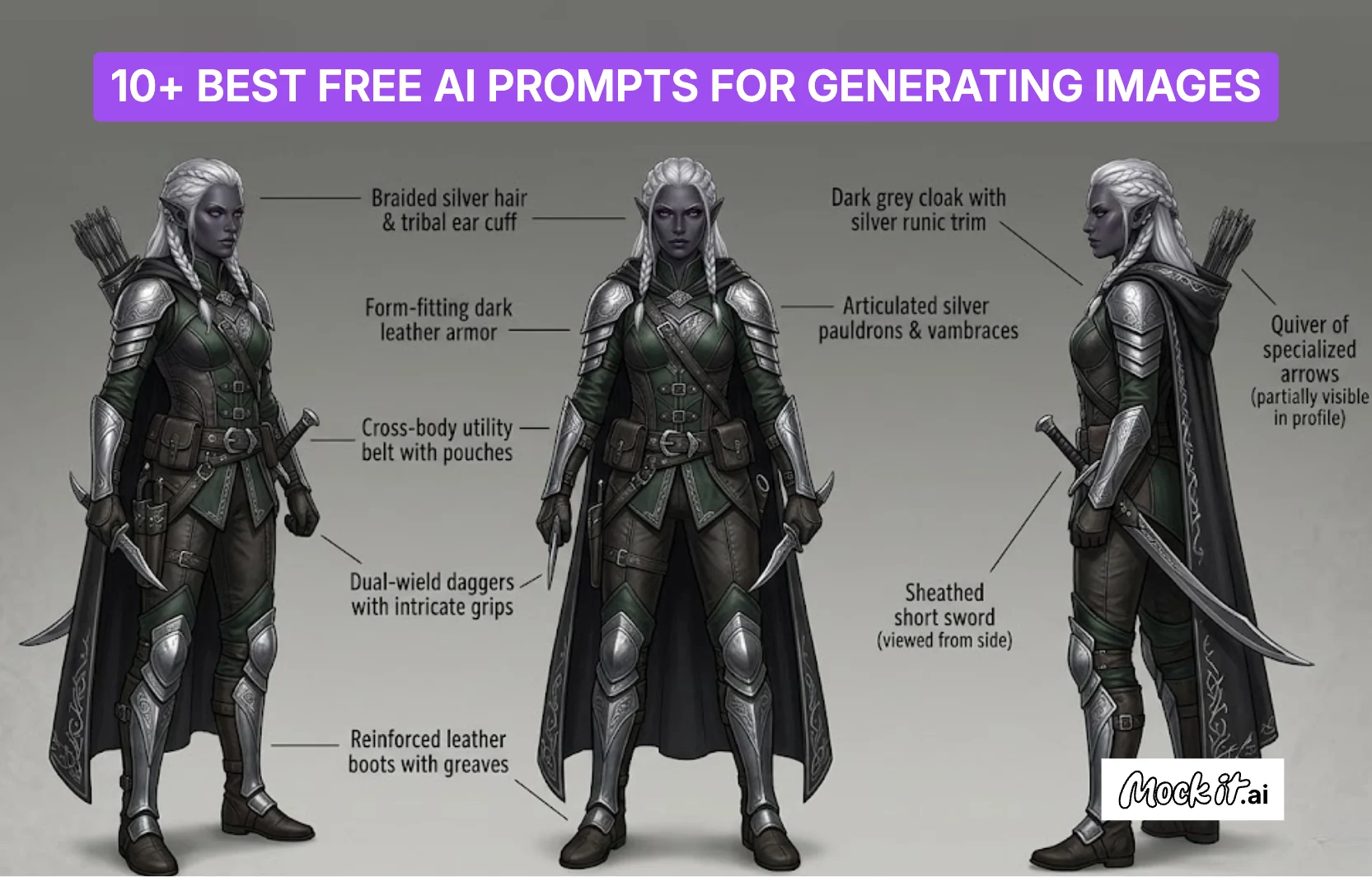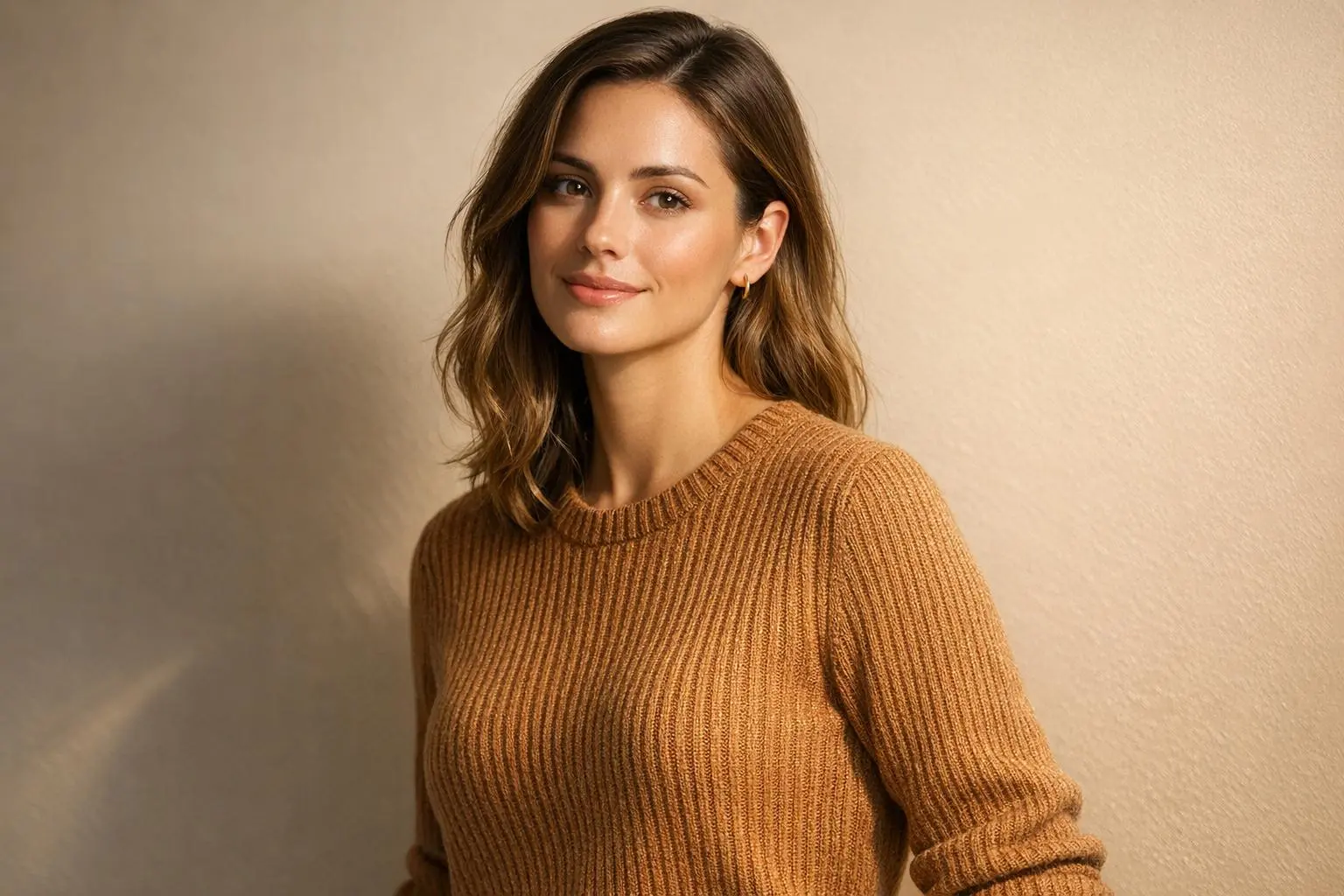
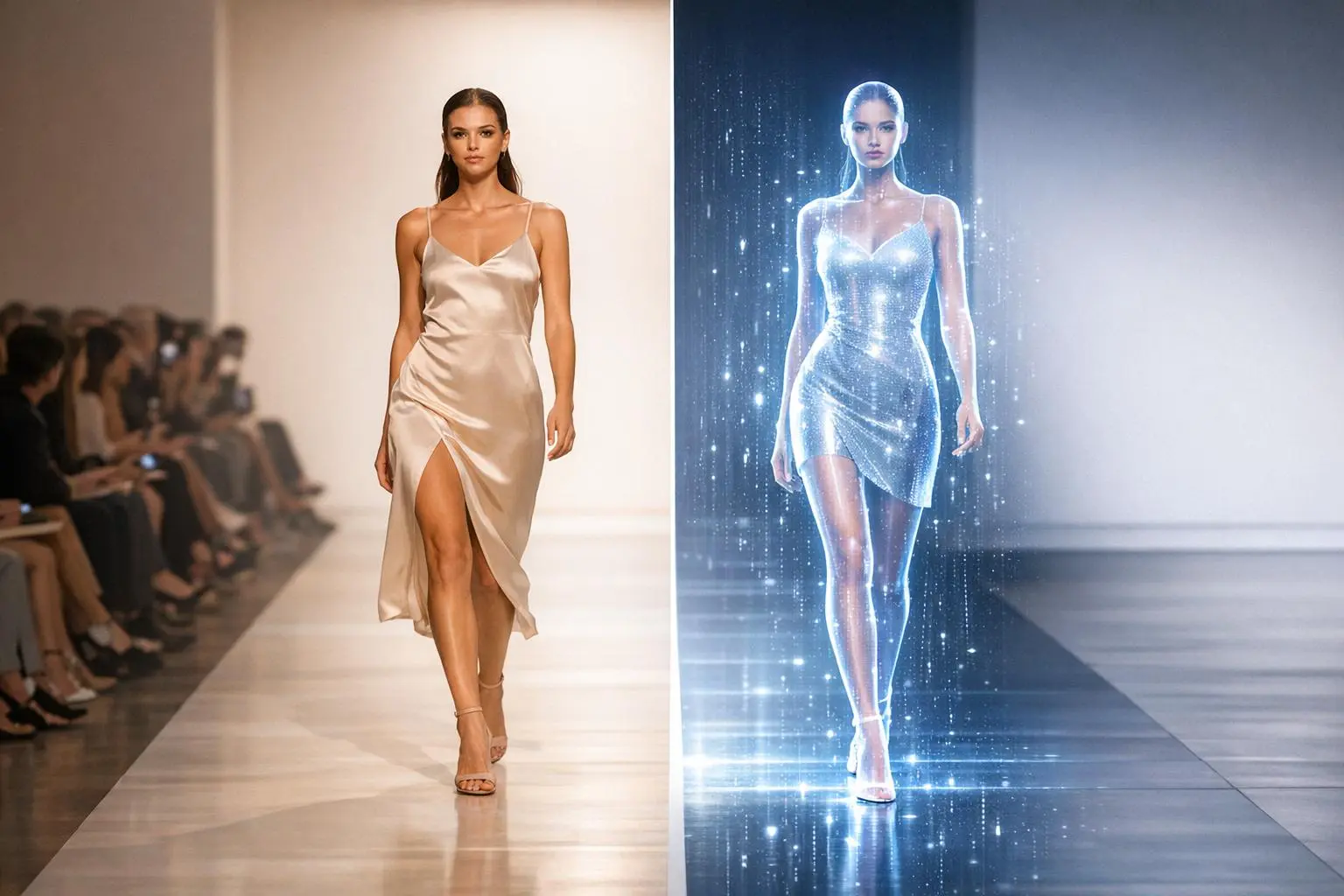
The fashion industry is shifting rapidly with AI-generated models replacing human ones in ad campaigns. While this reduces costs and speeds up production, it raises serious ethical concerns. Key issues include job losses for models and creative teams, misuse of likenesses, biases in AI training data, and the erosion of consumer trust.
AI models offer benefits like lower expenses and the ability to simulate diverse appearances, but they often fail to genuinely represent underrepresented groups. Real models, on the other hand, bring emotional depth and sustain jobs but come with higher costs and logistical challenges.
Key Points:
- AI Models: Cost-effective, customizable, but risk bias and job displacement.
- Real Models: Support employment and human connection but are expensive and less scalable.
- Ethical Issues: Consent, transparency, and fairness remain critical for both approaches.
Quick Comparison:
| Factor | AI Models | Real Models |
|---|---|---|
| Cost | Lower production costs | Higher production costs |
| Diversity | Simulated but may lack authenticity | Genuine but limited by hiring bias |
| Job Impact | Threatens creative industry jobs | Supports jobs across the industry |
| Consumer Trust | Requires clear labeling to avoid deceit | Builds trust through human connection |
| Bias | Prone to reflect societal biases | Can challenge or reinforce biases |
Balancing AI and human talent could be the way forward, but transparency, consent, and fair practices must lead the conversation.
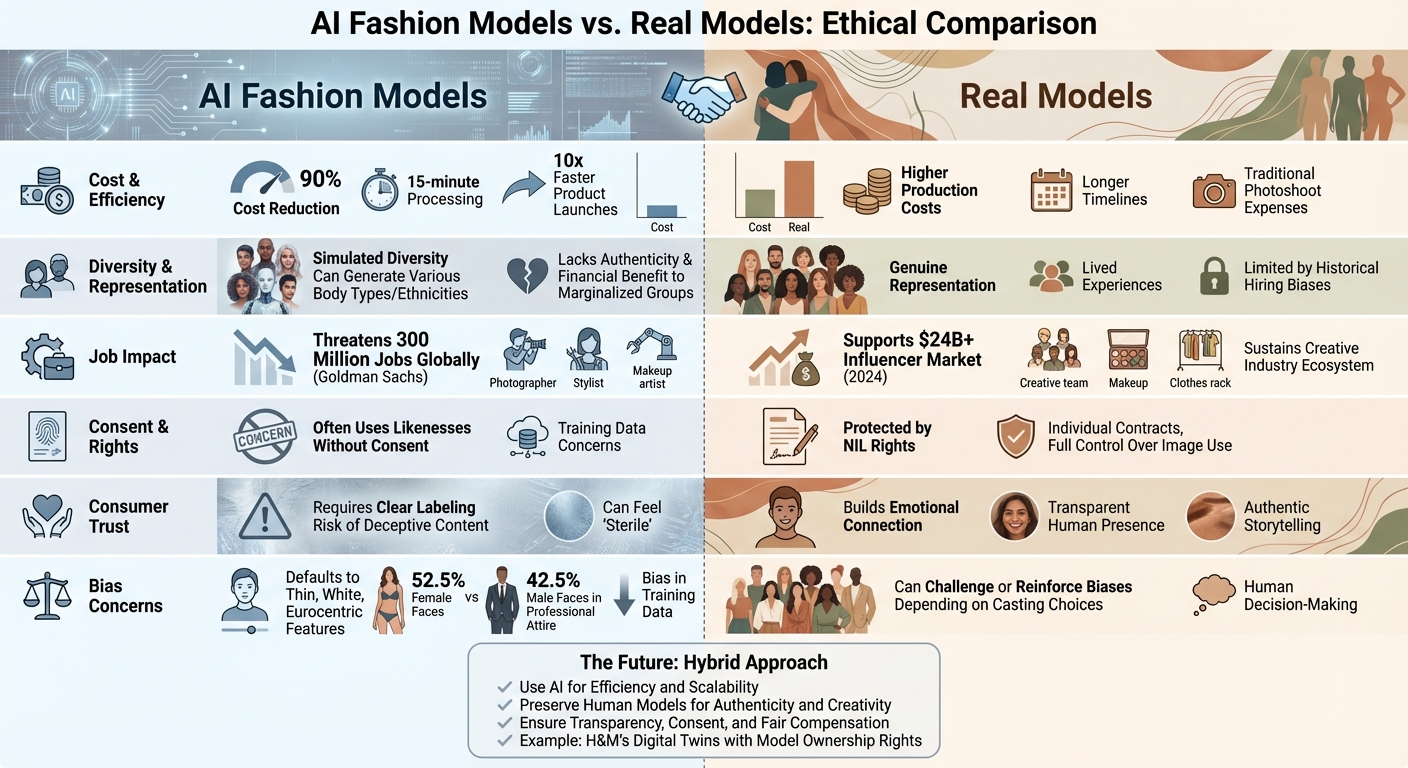
AI Fashion Models vs Real Models: Ethical Comparison Chart
AI-generated models shake up the fashion industry and raise concerns
Benefits and Ethical Advantages of AI Fashion Models
AI fashion models are shaking up the industry by cutting costs, speeding up production, and opening doors to better representation.
Lower Costs and Faster Turnaround
Traditional photoshoots can be expensive, with costs piling up for studios, crews, and travel. AI fashion models offer a game-changing alternative, slashing production costs by as much as 90% and cutting travel expenses in half. With AI, the process is lightning-fast – images can be processed in just 15 minutes, allowing brands to launch products up to 10× faster. One e-commerce manager highlighted this efficiency, noting their team now spends only 10% of the time they used to.
A boutique brand CEO summed it up perfectly:
"The images are so realistic that I can’t tell them apart from actual photos… we can launch products ten times faster than before."
This speed and cost-effectiveness are particularly beneficial for smaller brands. Instead of investing thousands in a single photoshoot, companies can start with simple smartphone photos of garments on a flat surface or mannequin. AI then transforms these into professional, on-model images. These visuals can be repurposed across marketing platforms, with options to change backgrounds, adjust poses, or even create fashion videos – all of which can boost engagement.
The financial flexibility AI provides also supports efforts to increase representation in fashion.
Promoting Diversity in Fashion
Fashion has long struggled with a lack of diversity, but AI has the potential to help change that – when used responsibly. Brands can now create models that represent a wide range of body types, ethnicities, ages, and abilities without the logistical and financial hurdles of casting multiple models. Beyond that, AI can deliver highly personalized shopping experiences. For example, consumers can create 3D avatars based on their exact measurements to see how clothing fits their unique body shape.
However, ethical use is critical. Industry leaders emphasize that AI should enhance diversity by showcasing models of different backgrounds, not replace real human talent from underrepresented groups. The distinction lies in whether brands genuinely aim to expand representation or merely use AI as a shortcut to appear inclusive. Ranjan Roy, VP of Strategy at Adore Me, explained:
"It’s really exciting and important that brands can train image models with diverse models rather than using AI to replace diverse models."
By embracing this technology thoughtfully, brands can create bespoke models that reflect their values and identity.
Tailored Models for Every Brand
AI platforms give brands the tools to craft custom models that perfectly align with their aesthetic and target audience. These models ensure visual consistency across campaigns, with options to adjust features like age, gender, ethnicity, body type, and skin tone. Brands can even place these models in any digital setting.
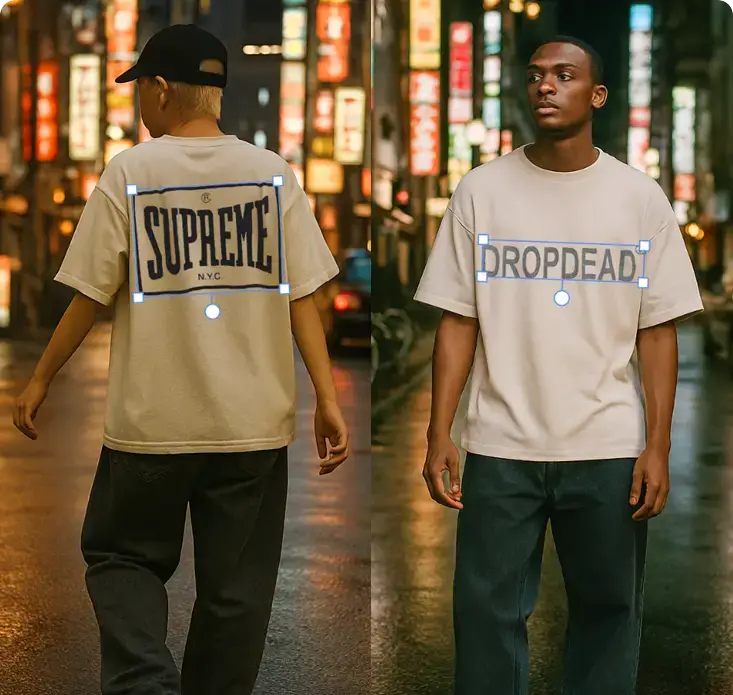
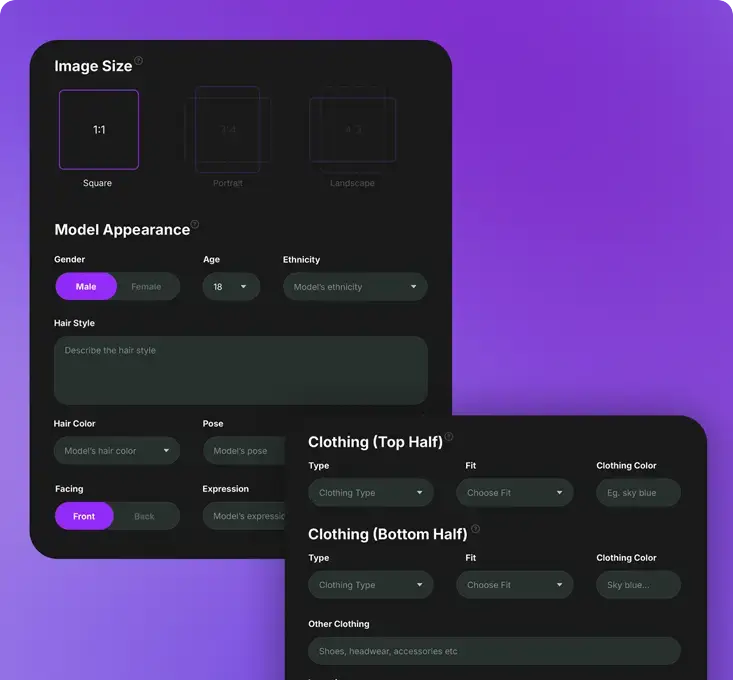
For example, Mock It AI allows companies to design custom models by choosing clothing, setting locations, and uploading designs, delivering a unique and cohesive visual identity almost instantly.
On the ethical front, some brands are leading the way with "digital twins" – virtual replicas of real models who are compensated for the use of their likeness. These models retain ownership and licensing rights, ensuring fair treatment. As model Yar Aguer put it:
"Finally a way for me to be in New York and Tokyo on the same day."
This approach not only respects the rights of real models but also highlights how AI can complement human talent rather than replace it.
Drawbacks and Ethical Problems of AI Fashion Models
While AI fashion models offer advantages in cost and efficiency, they come with significant ethical challenges. These challenges force brands to weigh the benefits against potential harm. From reinforcing narrow beauty standards to damaging consumer trust, AI’s role in fashion raises serious concerns about representation, transparency, and authenticity.
Bias in AI Training Data
AI models are trained on massive datasets pulled from the internet. Unfortunately, these datasets often reflect and amplify societal biases. For example, AI tools tend to default to thin, white, Eurocentric figures, reinforcing limited and exclusionary beauty ideals. In a 2024 Dove ad campaign, when AI was tasked with generating "the most beautiful woman in the world", it produced nearly identical images of young, thin, white women with blonde hair and blue eyes.
Another study on AI image completion revealed troubling patterns: 52.5% of female-presenting faces were completed wearing "bikini or low-cut tops", while 42.5% of male-presenting faces were shown in "suits or career-specific attire". Digital fashion designer Ravieshwar Singh highlighted this issue, stating:
"What we’re seeing now is the construction of these norms in real-time with AI."
AI also struggles to represent plus-size women accurately. This creates a false sense of inclusivity, allowing brands to appear diverse without actually supporting or hiring diverse talent. Instead of advancing representation, AI risks undoing progress made in the 2010s, particularly for marginalized groups such as plus-size, trans, and hijab-wearing models.
Beyond bias, AI lacks the human warmth and authenticity that make fashion storytelling resonate.
Missing Human Connection
AI-generated models often sanitize beauty, promoting unattainable ideals while stripping away authenticity. For example, in July 2024, Spanish retailer Mango launched a campaign featuring AI-generated avatars to promote a limited-edition collection. Although spearheaded by Chief Information Technology Officer Jordi Alex, the campaign faced backlash for misleading advertising, as the AI models failed to realistically depict how clothing fits real bodies. This criticism underscored a major limitation: AI simply cannot replicate the emotional connection that human models bring to a brand.
Former model and tech entrepreneur Sinead Bovell warned about the broader implications:
"Beauty standards are already being influenced by AI. There are young girls getting plastic surgery to look like a face in a filter – and now we see people who are entirely artificial."
The mental health impact is equally concerning. Vanessa Longley, CEO of the eating disorder charity Beat, explained:
"If people are exposed to images of unrealistic bodies, it can affect their thoughts about their own body, and poor body image increases the risk of developing an eating disorder."
Disclosure and Consumer Trust
Another critical issue is the lack of transparency in AI-generated content. Many brands fail to clearly disclose when AI is used, further complicating ethical concerns. In July 2025, Guess featured an AI-generated blonde model in Vogue‘s August print edition. Created by Seraphinne Vallora, the model sparked controversy for promoting unattainable beauty ideals. The disclosure label indicating the model was AI-generated was easy to miss, raising questions about transparency.
Plus-size model Felicity Hayward expressed her frustration, calling the move "disheartening" and "scary", adding:
"Using AI models in fashion campaigns feels lazy and cheap."
As of July 2025, it was not legally required in the UK to label AI-generated content. However, the ethical need for transparency is undeniable. Luana Carcano, a lecturer at Simon Fraser University, emphasized:
"Deceptive AI-generated content undermines audience trust."
Without clear labeling, brands risk accusations of false advertising and further erode consumer trust. This lack of transparency also has mental health implications, as consumers compare themselves to digitally created perfection.
The fashion industry is also grappling with a disturbing trend known as "Frankensteining." This involves digitally combining body parts from different models or superimposing one race’s face onto another’s body – often without consent. Zoë West, Senior Researcher at Cornell’s ILR School, recounted one model’s experience:
"An Asian American model said that seeing a white model’s face digitally superimposed onto her body felt like a ‘slap in the face.’"
Benefits and Ethical Strengths of Real Models
Even as AI becomes more prevalent in the fashion world, real models continue to bring something irreplaceable: a genuine human connection. They offer individuality, creativity, and a sense of authenticity that AI simply cannot replicate.
Emotional Connection and Human Creativity
Real models add a special kind of magic to campaigns, turning them into emotional experiences. As Brian Harris, Director of R&D at Vue.ai, put it, brands dedicated to inclusivity "are going to want to feature that magic they see in real model imagery". Seeing real people in clothing helps customers imagine how the garments will fit and move in real life.
But real models do more than just wear clothes – they bring creativity to the table. Casting agent Chloe Rosolek highlighted this, saying, "Models make an image incredible, and I don’t think that can be replicated through AI". Photographer Steven Meisel, known for discovering fresh talent and forecasting trends, built his career on this kind of creative intuition – something AI lacks. Real models collaborate with photographers, stylists, and designers to create images that feel vibrant and alive. This human element underscores a brand’s dedication to authentic representation.
Supporting Industry Employment
The impact of real models goes beyond creativity – they also sustain a wide network of industry jobs. A single photoshoot involves photographers, makeup artists, hairstylists, lighting technicians, and riggers. The influencer market alone was valued at over $24 billion in 2024, with projections exceeding $32 billion by 2025. When brands turn to AI models, they risk cutting off entry-level opportunities and jeopardizing the livelihoods of countless creative professionals.
Philippa Childs, Head of Bectu, the creative industries union, cautioned against this trend: "Even if models are compensated for the use of their image, it is hard to see how using technology will not have a significant detriment to other fashion creatives and industry workers, from make-up and hair, to rigging and lights". A survey revealed that 54% of workers represented by Bectu believe AI will negatively impact the fashion industry. Choosing real models isn’t just about aesthetics – it’s an ethical choice that supports fair labor practices and sustains the people, families, and communities that form the backbone of the fashion industry. Professional models, for instance, can earn anywhere from $100 to $1,500 per day, depending on their experience and the type of work.
sbb-itb-2c1a147
Drawbacks and Ethical Challenges of Real Models
Using real models in fashion campaigns adds a sense of realism and connection, but it also brings several ethical and practical challenges. Issues like working conditions, financial exploitation, and the lack of representation often lurk behind the glossy images.
High Costs and Complex Logistics
Producing traditional fashion campaigns can be surprisingly expensive. Beyond paying model fees, brands must budget for modeling agencies, stylists, makeup artists, photographers, and production crews. Add in costs for venue rentals, travel, and catering, and the expenses quickly pile up. These logistical hurdles make it hard for brands to scale their campaigns or experiment with more diverse representations. Plus, since real models are tied to specific locations, arranging multi-location shoots becomes even pricier due to travel and coordination costs.
Limited Diversity in Representation
The fashion industry has long struggled to reflect true diversity. Women of color, for instance, face significant barriers to entry, despite the industry’s public commitments to inclusivity. Many brands still prioritize narrow beauty standards – youth, slimness, and Eurocentric features – leaving little room for diverse talent. A 2024 study revealed that AI-generated images of "the most beautiful woman" predominantly featured young, thin, white women with blonde hair and blue eyes. This trend mirrors real-world hiring practices, where opportunities for both diverse and plus-size models have been declining.
Sara Ziff, the founder of Model Alliance, highlighted this disparity:
Fashion is exclusive, with limited opportunities for people of color to break in. I think the use of AI to distort racial representation and marginalize actual models of color reveals this troubling gap between the industry’s declared intentions and their real actions.
Yve Edmond also weighed in, emphasizing the importance of embracing real diversity:
We have this amazing Earth that we’re living on. And you have a person of every shade, every height, every size. Why not find that person and compensate that person?
This lack of diversity goes beyond aesthetics – it’s also an issue of economic fairness. By failing to hire diverse models, brands exclude marginalized communities from sharing in the financial benefits of a $2.5 trillion industry. For many, the opportunity to be represented in campaigns could lead to life-changing economic gains. Yet, systemic exclusion often denies them those chances, raising serious ethical questions about how traditional modeling practices align with the realities of a diverse and evolving market.
Ethical Comparison: AI Fashion Models vs. Real Models
When you compare AI models to human models, the ethical landscape gets pretty complex, with both advantages and challenges coming into play.
Consent and rights take center stage. Human models are protected by Name, Image, and Likeness (NIL) rights, which give them legal control over the use of their appearance. On the flip side, AI models often rely on training data that may include likenesses used without consent. Futurist Sinead Bovell, founder of WAYE, raises an important question:
Are certain communities being locked out of the opportunity to profit off of their own identity because somebody is using an AI-generated version of their identity instead?
This issue reflects broader concerns about transparency and fairness that have long been debated in the fashion industry.
Employment is another key concern. The rise of AI models could displace jobs across creative teams, including photographers, stylists, makeup artists, and set designers. According to a Goldman Sachs analysis, up to 300 million full-time jobs worldwide could be impacted by automation. In contrast, real models help sustain this ecosystem of industry professionals.
Diversity and bias present a tricky paradox. AI can generate avatars that appear diverse, but critics argue this often sidesteps the need to hire and pay individuals from marginalized communities. Moreover, when AI programs are tested without specific racial descriptors, they tend to default to generating images of white individuals. While human models bring authentic representation and lived experiences to the table, the traditional fashion industry has historically struggled with inclusivity. Dr. Luana Carcano, a professor at Simon Fraser University, highlights this complexity:
The decision to have a chatbot that has certain racial characteristics is the decision of the company
Consent and diversity emerge as recurring themes in this debate, underscoring the ethical dilemmas at play. A side-by-side comparison helps clarify these issues further.
Comparison Table
| Ethical Factor | AI-Generated Models | Real Human Models |
|---|---|---|
| Consent & Rights | Often uses likeness without consent | Protected by NIL rights and individual contracts |
| Job Displacement | High risk for models and creative crews | Sustains industry jobs and teamwork |
| Diversity & Bias | Can amplify biases; diversity lacks financial benefit to marginalized groups | Provides genuine representation and lived experience |
| Transparency | Requires clear disclosure to avoid misleading consumers | Transparent, as they are genuine individuals |
| Consumer Trust | Can erode trust if realities are blurred | Builds credibility through human emotion |
Transparency and consumer trust are also vital. Lynn Ong, head of marketing and PR at YOLO Event Agency, puts it plainly:
AI may look stunning, but it will feel sterile because it lacks the warmth and unpredictability that makes fashion human
While real models foster emotional connections with audiences, AI models often fall short in replicating that human warmth. However, AI doesn’t have to be inherently misleading. Brands can maintain trust by clearly labeling AI-generated content and being upfront with their consumers.
Finding Balance: Using AI and Real Models Together
Blending AI’s efficiency with human creativity offers a sustainable path forward for the fashion industry. By using AI as a tool rather than a replacement, brands can streamline operations while safeguarding the creativity and jobs that keep the industry vibrant. The key lies in clearly defining AI’s role as a support system, with strict guidelines to protect model rights and maintain consumer trust. This approach not only improves productivity but also ensures that the human touch and ethical considerations remain at the forefront.
Protecting consent and human rights is non-negotiable, making it crucial to distinguish AI-generated content from genuine human artistry.
How Mock It AI Supports Ethical AI Use
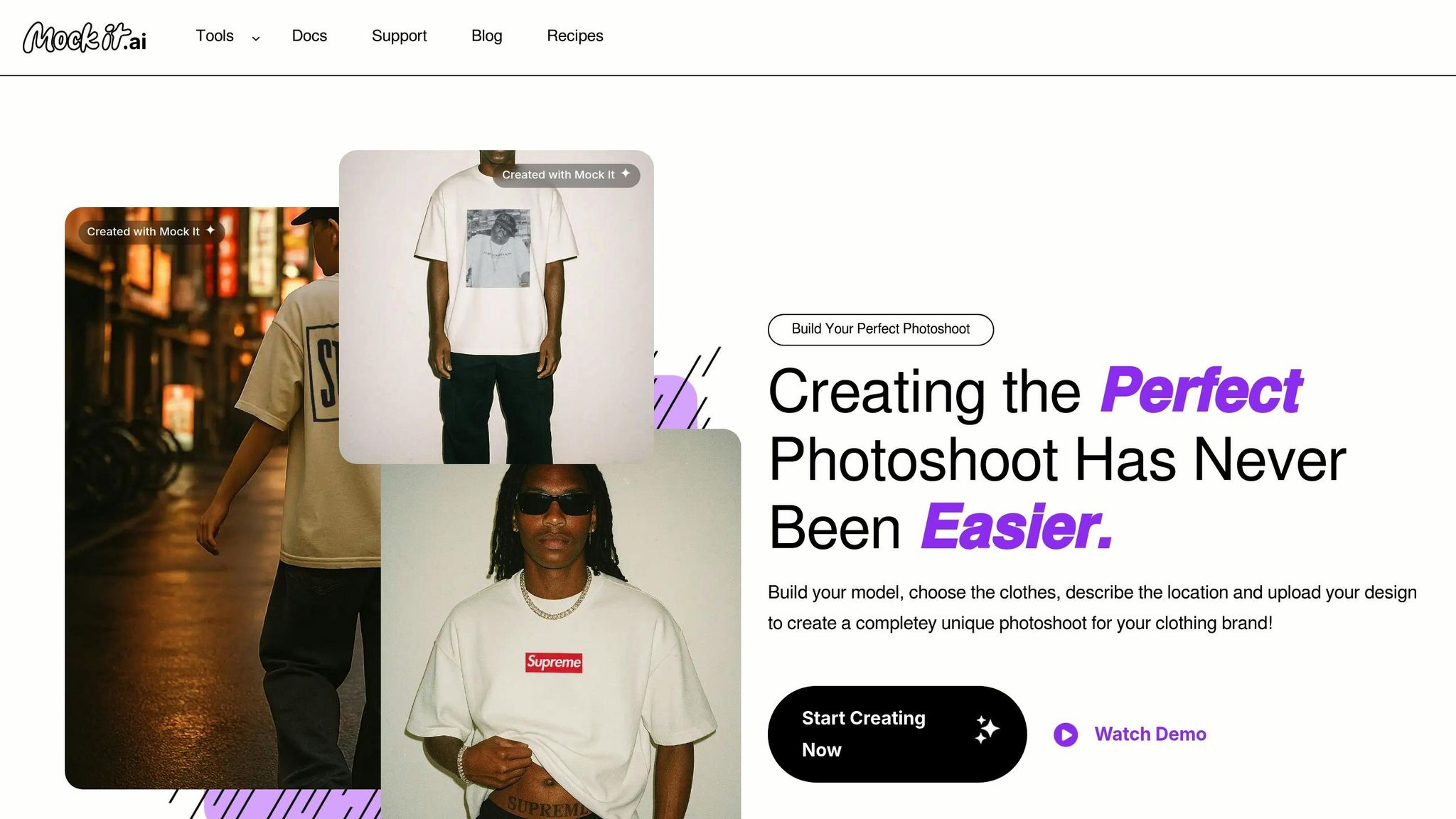
Mock It AI provides a solution for brands aiming to create custom AI photoshoots without compromising ethical standards. The platform allows users to control every element, from clothing to location, eliminating concerns about using pre-existing imagery without consent. Starting at $12 per month for 100 photoshoot credits, Mock It AI is particularly useful for high-volume needs like e-commerce lookbooks and social media campaigns. This affordability allows brands to allocate savings toward campaigns that require the authenticity and emotional depth only human models can deliver.
Strategies for Combining Both Approaches
To address ethical concerns, brands can adopt strategies that balance AI with human talent. Here are some examples of how this can work effectively:
H&M Group, for instance, collaborated with Uncut to create digital twins of 30 real-life models, including Vilma Sjöberg and Mathilda Gvarliani. These models retain full ownership of their digital likenesses, enabling them to license their digital avatars to other brands – even competitors. Chief Creative Officer Jörgen Andersson emphasized this initiative as a way to provide models with an additional revenue stream while helping the brand produce large-scale social media content.
Marc Bain from The Business of Fashion highlighted this innovative approach:
The models themselves will own the rights to their twins… and will even be able to let other brands use them, including H&M’s competitors.
Levi Strauss & Co.’s 2023 partnership with Lalaland.ai offers another perspective. The collaboration aimed to pilot AI-generated models for greater diversity. However, public backlash prompted the company to clarify that this was not a shortcut to improving representation. Shereen Daniels, Managing Director at HR Rewired, pointed out:
If you’re a brand that already has challenges around representation and racial equity, tacking [AI] on is always going to look problematic, like you’re trying to take a shortcut to ‘look better’.
For high-end campaigns, real photoshoots remain indispensable. In February 2024, the British talent incubator On|Off showcased a hybrid approach during London Fashion Week. Their "phygital" fashion show featured gender non-conforming physical models alongside their avatar counterparts, each wearing digital twins of the same outfits.
Transparency is equally important. Brands should adopt clear labeling practices, such as watermarks or text like "AI-generated imagery", to indicate when content is digitally created. Additionally, creating digital replicas must involve separate consent agreements with fair compensation terms. Dale Noelle, Founder of True Model Management, stressed this point:
Empowering diverse models by giving them the means and protection to capitalise on their digital twins through licensing agreements is essential.
Conclusion
The discussion isn’t about picking sides between AI and real models – it’s about finding the right balance. AI brings undeniable perks like cost efficiency and scalability. For instance, platforms like Mock It AI provide options starting at just $12 per month for 100 photoshoot credits. Still, these tools shine brightest when they enhance rather than replace human talent, preserving the emotional depth and creative flair that only real models can offer.
But with these advancements come crucial ethical challenges. Issues like transparency, consent, and fair compensation must lead the way. As John Horner, MD of the British Fashion Models Association, aptly put it:
Human creativity must remain central to policy. We need clear-eyed conversations around IP, ethics, accountability, and the economic value of human creative work. Creativity built our culture. AI shouldn’t erase it.
Horner’s words emphasize the importance of safeguarding human creativity as technology continues to evolve.
Brands that navigate this shift successfully will be transparent about AI-generated content, protect models’ rights to their digital likenesses, and use AI to support – not overshadow – authentic representation. Recent efforts in the industry are already moving toward frameworks designed to protect both innovation and human rights. These steps are helping create a future where fashion embraces progress without losing its human touch.
Platforms like Mock It AI allow brands to experiment with creative ideas efficiently while saving resources for campaigns that demand genuine human artistry. By committing to ethical practices, carefully reviewing contracts, and keeping human oversight at the heart of creative decisions, fashion brands can leverage AI’s potential without compromising the values that matter most to consumers.
The future of fashion lies in blending digital advancements with human creativity. Technology can amplify artistry, but it must do so while respecting the individuals who bring the industry to life. As highlighted earlier, transparency, consent, and respect for human talent will remain the foundation of a thriving, forward-thinking fashion world.
FAQs
How do AI fashion models affect job opportunities in the fashion industry?
AI fashion models are entirely digital creations that can be styled, posed, and placed into virtual environments – all without the need for traditional photoshoots. For brands, they offer a faster, more cost-effective way to produce content, while also being scalable. This shift could mean less demand for human models, photographers, stylists, and other professionals typically involved in physical shoots.
But it’s not all about replacing existing roles – this technology is also opening doors to new opportunities. Jobs like AI model designers, prompt engineers, and digital asset managers are emerging to support the creation and use of these virtual models. Plus, human models who agree to have AI replicas of themselves can earn royalties whenever their digital twin is used. This transforms what might seem like a threat to traditional jobs into a chance for new income streams. While some roles may evolve or diminish, AI is sparking innovation and redefining the way the industry operates.
What ethical issues arise from using AI-generated models in fashion?
The use of AI-generated models in fashion brings up some tough ethical challenges. One of the biggest issues is consent. These AI models often rely on massive datasets of images, and sometimes, the individuals whose photos are used never gave their permission. This raises serious questions about ownership and whether people should be compensated when their likeness is repurposed. On top of that, U.S. laws around image rights and AI-generated content are still catching up, leaving brands and creators navigating a legal gray zone.
AI models also risk reinforcing harmful beauty standards. By showcasing idealized, often unrealistic appearances, they could negatively influence consumers, especially younger audiences who are more impressionable. To make matters worse, the lack of transparency around whether a model is real or AI-generated can mislead consumers and chip away at trust in advertising.
There’s also the job impact to consider. The rise of digital avatars doesn’t just threaten the livelihood of human models – it could also affect photographers, stylists, and other professionals who make traditional photoshoots happen. This shift underscores the need for clear industry standards that protect creative workers, promote fair practices, and strike a balance between innovation and ethical responsibility.
How can fashion brands ethically use both AI-generated and real models?
Fashion brands can combine AI-generated models with real ones in a way that complements rather than replaces human involvement. The key lies in transparency – clearly informing consumers when a model is AI-generated helps maintain trust and avoids any sense of deception. It’s equally important that brands secure proper consent and, when applicable, provide fair compensation for any real-person data used to train AI systems.
To encourage inclusivity, AI avatars should reflect a broad range of body types, ethnic backgrounds, and abilities. This approach can help challenge and expand traditional beauty standards. However, real models should still play a significant role in campaigns, ensuring the creative ecosystem – which includes photographers, stylists, and other professionals – continues to thrive. For instance, AI might be used for early-stage concept development, while real models bring the final vision to life in campaigns, striking a balance between innovation and genuine human representation.
Ethical data practices are also critical. Brands should avoid indiscriminately scraping public images, create clear guidelines for data usage, and regularly review AI-generated content for potential biases. By focusing on transparency, inclusivity, and responsible data use, brands can embrace AI’s benefits while honoring the creativity and labor that humans bring to the table.